

INTAKE #60
COCA-COLA STICKS THE LANDING. JEWELRY BECOMES FINE ART. THE TRADES GO SIX-FIGURE.

I’m writing this week on the long return from Cape town, 21 hours of travel, and the southernmost point I’ve been, closer to Antarctica than any other continent.
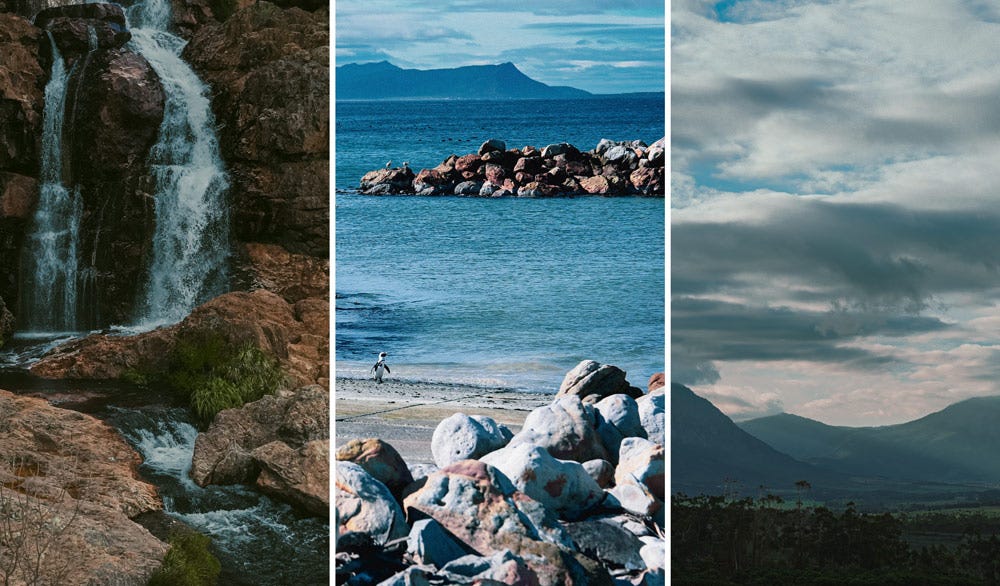
For those of you in film, or commercial production, Cape Town is one of the best shooting locations for a trifecta. Obviously, access to nature, within a few hours driving radius of the city you can reach an amazing range from stunning coasts to deserts, mountains, waterfalls the natural landscape is incredible. I learned about the six floral kingdoms, of which cape town is 1 entirely on its own.
Secondly, is the value of the dollar, it goes FAR here with the ability to build and produce at scale very affordably.
Then there’s QUALITY, Cape Town is such a hot production market that competition is fierce, meaning the companies down here are vying aggressively for business, resulting in a level of quality in production services I have to say was bar none. I hope to return here, the entire experience of producing in this country is something I cannot speak highly enough of.
Oh, and there’s penguins, just walking around on the beaches.
What were looking at this week:
Coca-Cola dusts off an icon without breaking it. Ross Bleckner opens his sketchbooks in East Hampton. The Lucas Museum makes its billion-dollar case for the craft of storytelling. The trades go from basement elective to the new six-figure ladder. Major Food Group buys a golf course. Gap finds its footing in whitespace and nostalgia. And Richemont posts 20% growth by turning jewelry into fine art.
COCA COLA STICKS THE LANDING
Kudos to Rapha Abreu, Coca-Cola’s Global VP of Design, and JKR for pulling off what usually amounts to touching the third rail: a tasteful dusting-off of maybe the most iconic American brand. I won’t go so far as to call it a rebrand, because that’s exactly why it succeeds.
Coca-Cola’s design team knew better than to wipe the slate clean with a 148 year old brand.
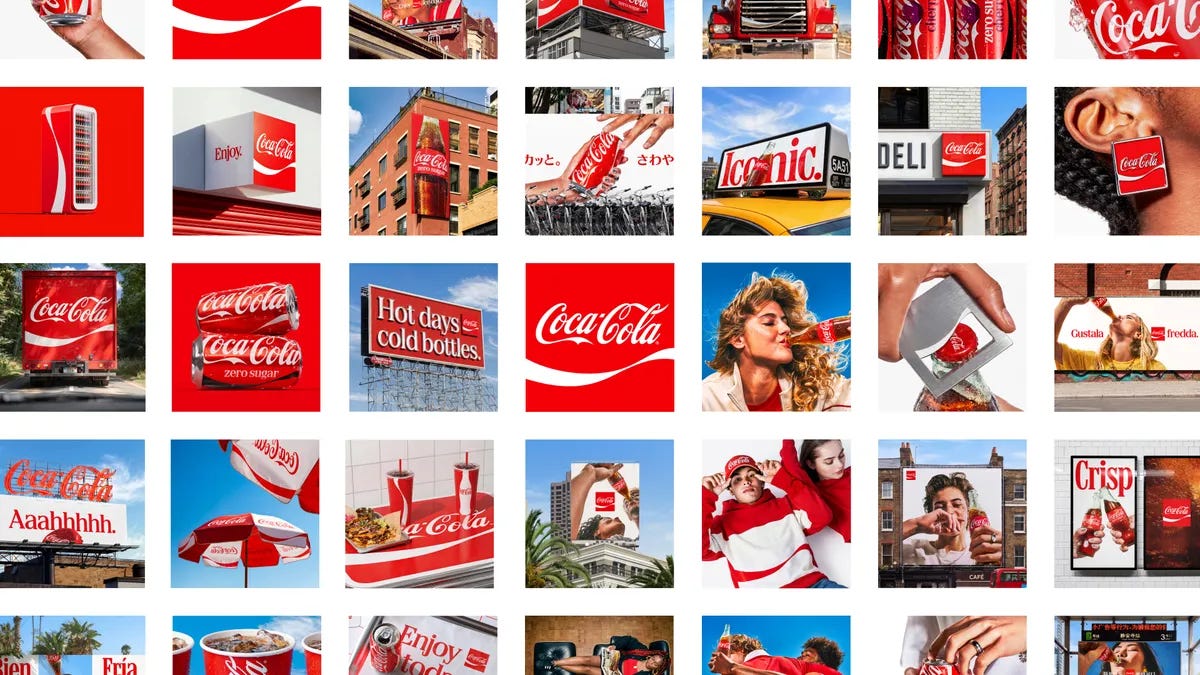
The faceplants in big rebrands usually come from reinventing something iconic until it’s either unrecognizable or bent to fit a passing trend. Cracker Barrel, Jaguar, and the Tropicana fiasco are all cases of doing too much. It’s the curse of rebrand we’ve written about before, the one that cost Jaguar both its sales and its CEO and forced Cracker Barrel into a public reversal inside a week.
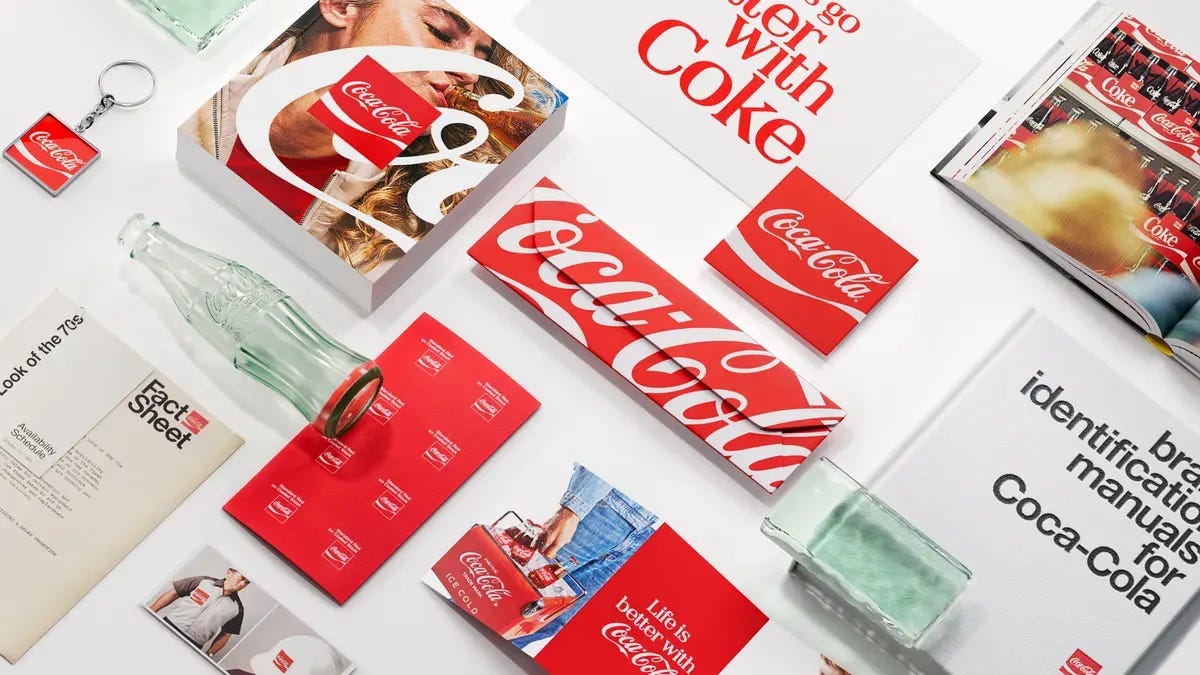
The design team and agency roster on this one avoided that minefield by doing just enough.
How do you rebrand Coca-Cola? 🥤
You don’t.
- Rapha Abreu
The brief stayed simple: make Coca-Cola more Coca-Cola.
JKR is known for herculean legacy rebrands, and what I found interesting is that they didn’t really redesign much at all. The job wasn’t to redraw the marks, it was to solve the challenge every modern brand faces: building an asset library that can keep pace with every touchpoint communication now demands. It’s an evolution of how Coca-Cola shows up.
A system built to hold across 200-plus markets, a type treatment that leans on negative space, the prominence of that iconic red, and plenty of room for vibrant, joyful photography.
One thing you can’t unsee is that the secondary type, especially against the red, is very Marlboro-coded, and I’m not the only one making that connection. I still love it. Worth flagging that the ‘Better With’ typeface isn’t net-new; Brody Associates drew it back in 2023.
I give it a 10. The secondary type is doing great work, the imagery is crisp, and the new red usage is strong. So far it’s landing well, which I imagine is a real sigh of relief for the teams who shipped it.
“NEVER THE LESS” BY ROSS BLECKNER
I often love the sketches, the process and ancillary work that leads up to the more iconic finished pieces. Show me sketchbooks, and the studios where the work was made.
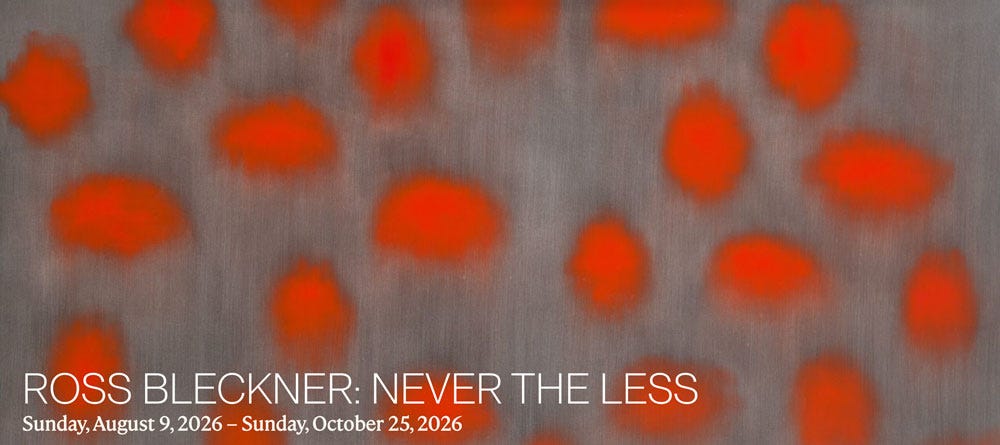
Which is why I love this exhibit focused on Bleckner’s process. Hundreds of small scale sketches, loose paintings and compositional pre-work which show the evolution into his massive pieces.
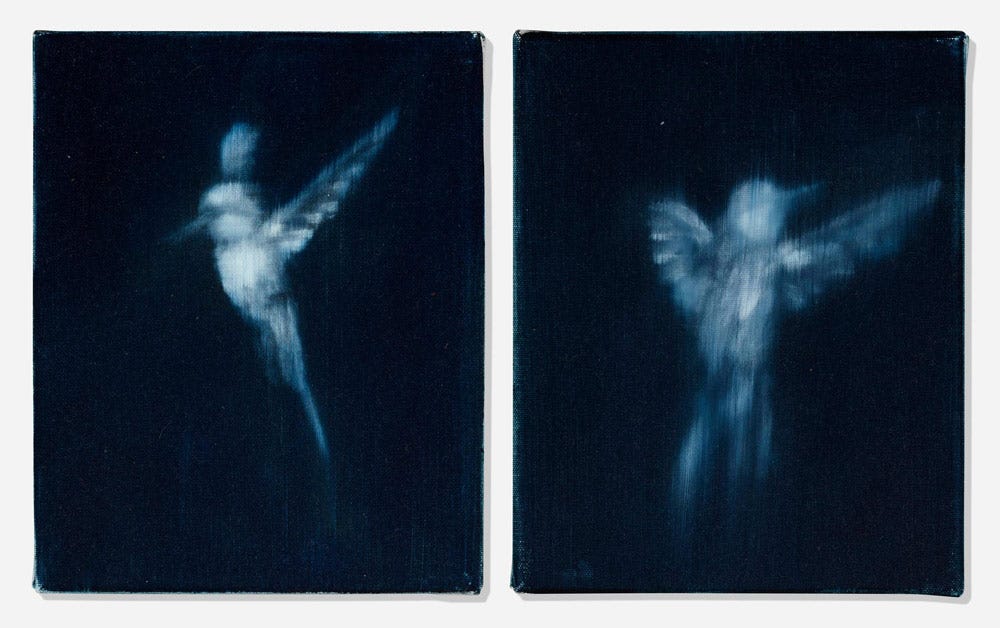
The exhibition runs through October so plenty of time to make the trip out east for it.
Guild Hall (158 Main Street, East Hampton, NY)
WATERMILL FOUNDATION GALA / IN PARTNERSHIP WITH MATTE
This weekend MATTE is supporting the Watermill Center Summer Benefit, the close of a year we spent in conversation about how to best back the artist residency and museum that has anchored the East End for decades.
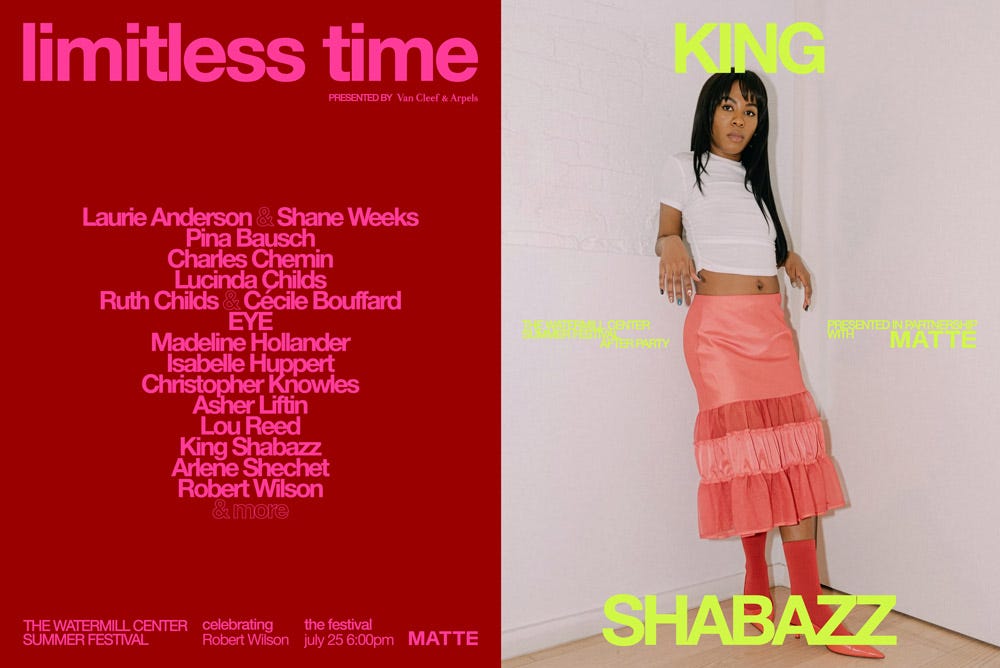
Every summer the Center holds a benefit where artists from that season’s residency, plus a wider curation, transform the sprawling grounds into a dreamscape of performance, installation, and music. The night funds the year-round International Summer Program, running July 5 to August 2, which places global artists in a landscape rich with nature and resources and lets them make.
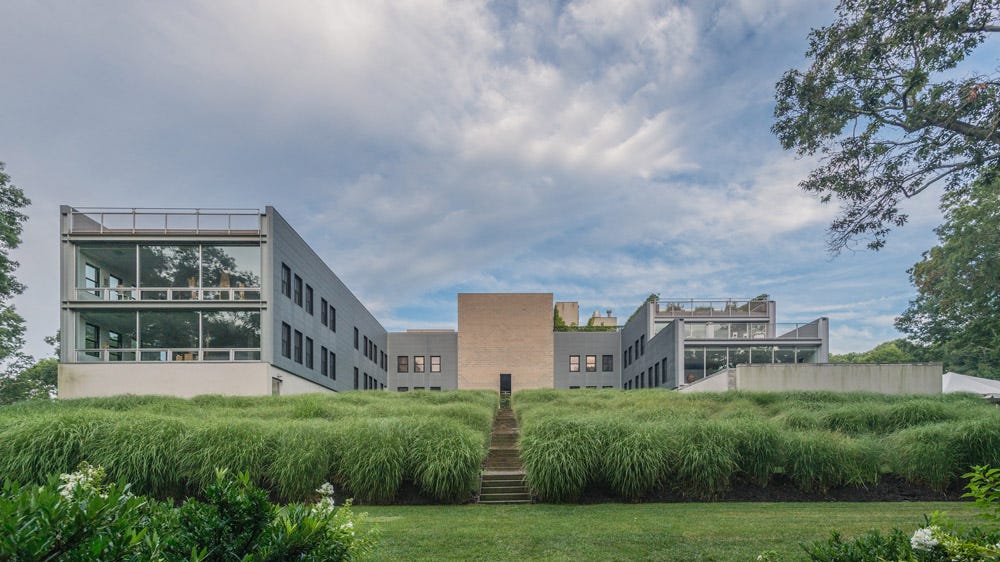
Founded in 1992 by Robert Wilson, the Center is holding this benefit without its founder for the first time. Wilson died July 31, 2025, and 2026 has turned into a year of tributes, from a retrospective at the Venice Biennale in June to a film series at Anthology in New York this spring. This is the largest showing of his work in the US since his 1991 retrospective.
The program leans into his orbit, with works connected to Laurie Anderson, Isabelle Huppert, Lucinda Childs, and Pina Bausch.
MATTE’s role this year is the music, and some of the vibes. We’re bringing Shabazz on the sonic tip.
DE PALMA: SUMMER OF SUSPENSE
The Museum of the Moving Image is easy to overlook, and I keep meaning to pay closer attention to their programming, because they regularly land major directors and filmmakers presenting their own work. I’ve seen two such memorable things there so far, a Phillip Glass retrospective and Tim Burton exhibition.
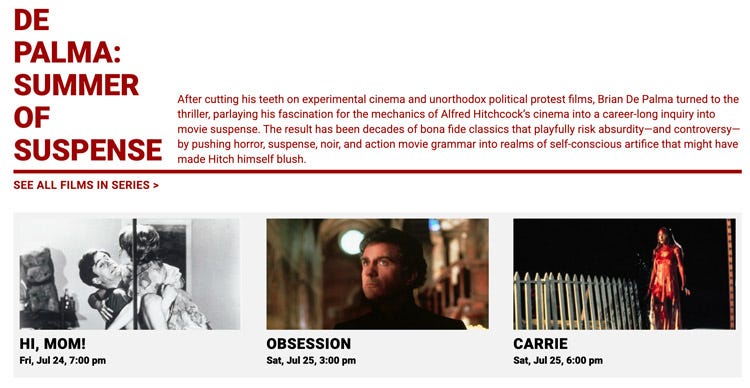
All summer the museum is running De Palma: Summer of Suspense, ten films across thirteen showings on select Fridays, Saturdays, and Sundays through August 29. De Palma gave us some of the grittiest, most iconic masterpieces of the eighties and nineties, gangster epics like Scarface, The Untouchables, and Carlito’s Way. This series pulls forth, the suspense work that came out of his lifelong fixation on Hitchcock: Blow Out, Dressed to Kill, Phantom of the Paradise.
It makes for a good night paired with dinner in Astoria, which has some of the best restaurants in the city, in my opinion.
June 12 – August 29, 2026
LUCAS MUSEUM OF NARRATIVE ART
“Stories are mythology, and when illustrated,
they help humans understand the mysteries of life.”
George Lucas, co-founder
Continuing a theme of cinematic museum coverage, on the other coast: we’re about nine weeks out from the opening of the Lucas Museum of Narrative Art. It’s a monstrous commitment to the business and art of storytelling, thirteen years in the making and a reported $1 billion of his and Mellody Hobson’s own money.
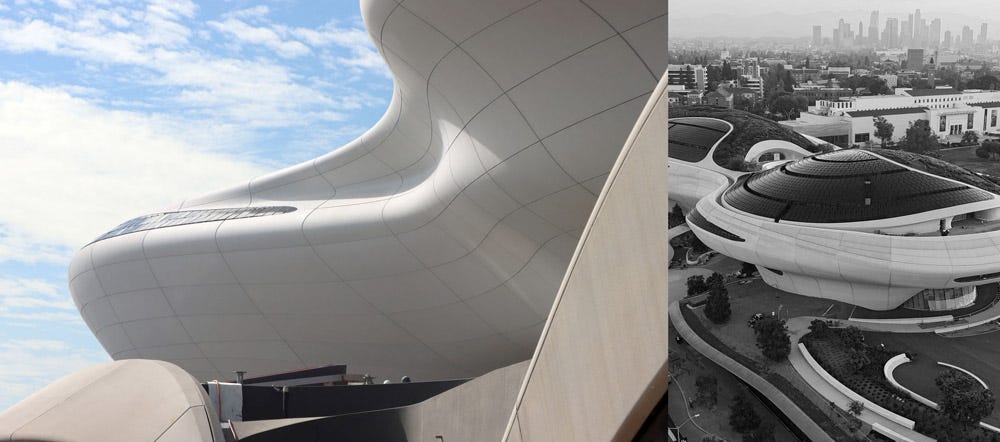
It’s been a long journey, with two earlier sites proposed and declined. First San Francisco’s Presidio, rejected after roughly four years of negotiation, then Chicago, abandoned after two years of litigation with a parks-preservation group. The resistance to museums on public land is interesting to me. Los Angeles embraced it, which makes sense, this being the home of cinema. Construction alone has run eight years.
This is a museum built to argue that illustration, comics, and movie props are art, which I wholeheartedly agree with. Lucas is the quintessential person to shepherd it: his own ILM archive is sprawling on the Star Wars and Indiana Jones IP alone. The permanent collection runs 40,000+ works, of which roughly 1,200 will be on view at opening.
It is not a Star Wars museum, which the institution is working hard to make clear. Yes, Luke’s Landspeeder and a 33-foot Naboo starfighter are in the building. But so are Norman Rockwell, Frida Kahlo, Jack Kirby, Gordon Parks, Dorothea Lange, Winsor McCay, and Mœbius. Illustration, comic art, photography, and cinema sharing a space that platforms them as credible fine art.
Lucas personally curated the inaugural program: roughly 20 thematic exhibitions. They run across individual artists (Rockwell, Thomas Hart Benton, N.C. Wyeth, Maxfield Parrish, Frank Frazetta, Jessie Willcox Smith), media (photography, architecture, cinema, murals), and genres (the American West, children’s stories, manga and anime, comics and graphic novels).
Broader themes span History, Everyday Life (Community, Love, Motherhood, Sports), and Narrative Forms: Adventure, Fantasy, Romance, and of course Science-fiction.
“Star Wars in Motion“ will be the museum’s inaugural cinema exhibition, which I cannot wait to take my daughter to.
Every resident of the 90037 ZIP code, the neighborhood beside Exposition Park, gets free membership in perpetuity, a forever pass for as long as you live there. The museum sits next to USC, Lucas’s alma mater. General admission runs $25, free for anyone 17 and under, with tickets going on sale this month ahead of the September 22 opening.
What’s below the paywall:
Two new additions to the resource toolbox: The Index and Brand Archive. Kimi distilling Anthropic’s Fable playbook. The trades going six-figure, and why welders are the new programmers. Anthropic’s Reflect, its answer to Spotify Wrapped. Major Food Group buying a 187-acre golf course. Gap’s tenth straight positive comp quarter. Richemont’s 20% and jewelry crossing from accessory to fine art. And the $100K feed selling Wall Street early access to Trump’s posts. Plus this week’s Books.
This is issue 60. If you’ve been reading weekly and getting value from this, a paid subscription is the best way to support the work. Many readers expense INTAKE as a professional resource, here’s a template for that.
As I mentioned previously, if you’d like a free subscription, feel free to reach out on why, I’ll most likely be happy to oblige.
