

Lean is the new leverage
Two no-budget films just beat the IP machine, companies are reckoning with their AI bills, retail investors are routing around the 1% fee, Margiela hand-curates his own archive, and Apple Maps goes photoreal in iOS 27.

The man who moves a mountain starts by carrying away small stones
Confucius, (via reading Shoe Dog)
Two directors under thirty just turned budgets of $750K and $10M into the biggest original box-office openings in years, while studios keep ballooning spend on IP nobody asked for. Retail investors are routing around the 1% advisor fee and outperforming professionals with tools that did not exist two years ago.
Q1’s ‘Tokenmaxxing’ is reeling in as companies see the bills, and realize usage was never the same thing as value.
The pattern this week, across film, capital, and craft, is a correction away from maximalism toward precise deployment.
Elsewhere: Scorsese backs an AI image lab and aims it at storyboards, Prada and Axiom unveil the cooling layer of NASA’s next moon suit, and Margiela hand-curates an auction of his own archive. Fujiko Nakaya fills a Tadao Ando rotunda with living fog, Apple Maps goes photoreal in iOS 27, and Major Food Group takes the keys to De Niro’s Tribeca Grill. Plus the talent and resources I’m clocking right now, from Stephanie Stamatis to SearchSystem.
YOUNG HOLLYWOOD
The back-to-back success of Kane Parsons’ Backrooms (A24) and Curry Barker’s Obsession (Focus Features) comes at a time when Hollywood needed a reminder, or a permission slip, to give audiences things outside the box and take risks on new IP.
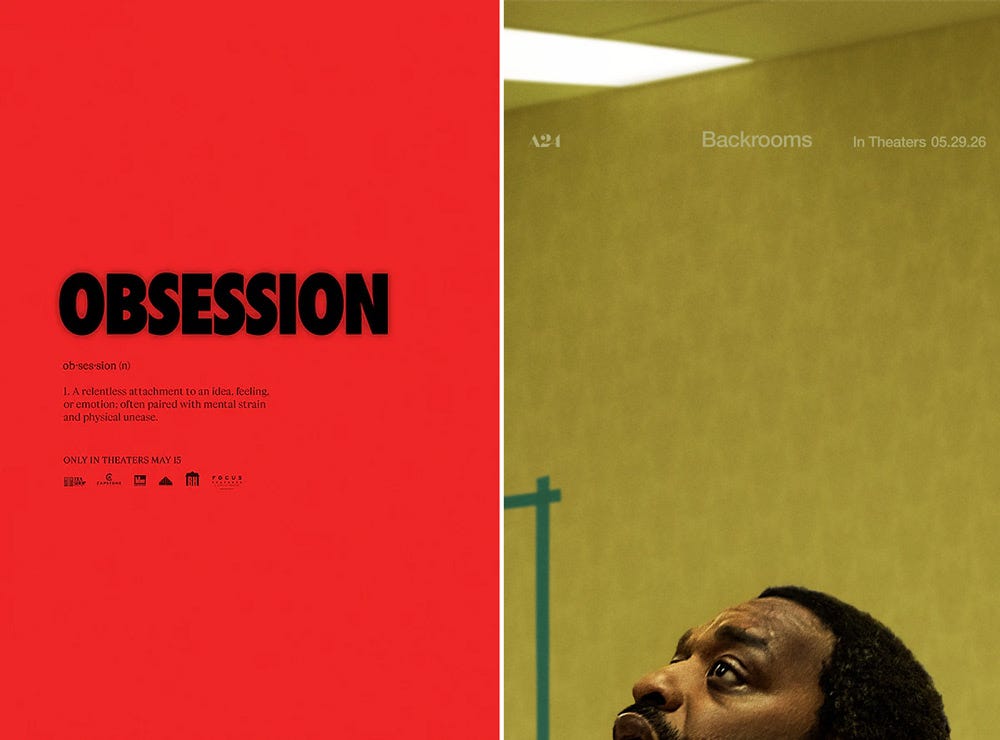
A new generation of filmmakers is showing you can break through with smaller budgets, fresh ideas, and a working knowledge of the internet’s culture engine, to beat the IP machine at the box office. The two films took different paths. Backrooms leans into internet lore and a new kind of IP, closer to Five Nights at Freddy’s; Obsession is pure indie word of mouth. Both are supported by strong marketing campaigns that played a huge role in their success.
Hopefully this wakes Hollywood out of its sequel sleepwalk. Audiences have been spoonfed safe bets. Big studios have spent the past decade oversaturating us with sequels, prequels, and regurgitations of ‘90s classics. Getting new ideas through the big studio model is really hard. Budgets ballooned, and with that came the thing Martin Scorsese is lamenting: the obsession with numbers over narrative.
An unfortunate case in point: Paul Thomas Anderson’s One Battle After Another, critically acclaimed and one of my favorite cinematic experiences last year, a genuinely NEW film. It cost so much to make and market that it lost roughly $100M in its theatrical run. That leaves big studios more inclined to give us things they know have built-in audiences, and that gets boring.
“If all we make is known, branded IP, we’re going to run out of gas.”
Steven Spielberg, at CinemaCon, April 2026
Backrooms proves there are other places to look for IP than the ‘90s, superheroes, and video games. The vast landscape of YouTube creators is a new frontier for franchise material, and these creators have a honed understanding of marketing, virality, and audience from being chronically online.
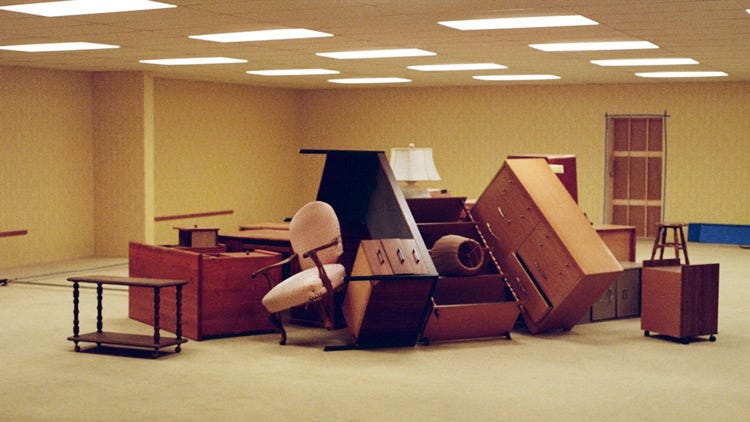
It’s a film born from urban legend, highly crowdsourced, which Parsons spun into his own atmospheric alternate canon, growing a fandom for years under the handle Kane Pixels. The first major film franchise whose IP is collectively authored folklore that “doesn’t belong to any one person” (Slate). That fandom is niche but massive: YouTube logged 2B+ views last year of videos with “backrooms” in the title, and that gave Parsons momentum.
Analytics firm Brighter Path estimates the Kane Pixels fandom alone accounted for 22% of Backrooms’ opening-weekend demand, the single largest demand driver (THR).
This film could usher in a wave of YouTube directors who can bring their audiences to the big screen.
“We say YouTube is the new Hollywood. It’s where people go to connect with everything they love.” Angela Courtin, YouTube VP Marketing, THR
YouTube is this generation’s version of commercial directors breaking out, a place to hone craft before the big leagues. Ridley Scott made over 2,000 commercials before Alien; Michael Bay and David Fincher also came up in advertising.
“The world is changing, and Hollywood needs to look to YouTube to find the young people who are coming up and have something to say. People like Kane grew up online and they’ve figured out how to get eyeballs on their work in a way that wasn’t possible for young filmmakers 20 years ago.”
Kori Adelson, producer (Backrooms), Variety, 2026
Backrooms opened to $81M domestic, A24’s largest debut ever, more than tripling the prior record (Civil War, $25.5M, 2024), and the biggest opening for an original horror film. It crossed $100M domestic in six days, A24’s first $100M film, making Parsons, at 20, the youngest filmmaker ever with a No. 1 film. As of this week it is A24’s highest-grossing film ever worldwide, $221M and counting, passing Marty Supreme’s $191.2M lifetime gross in ten days.
All on a $10M budget.
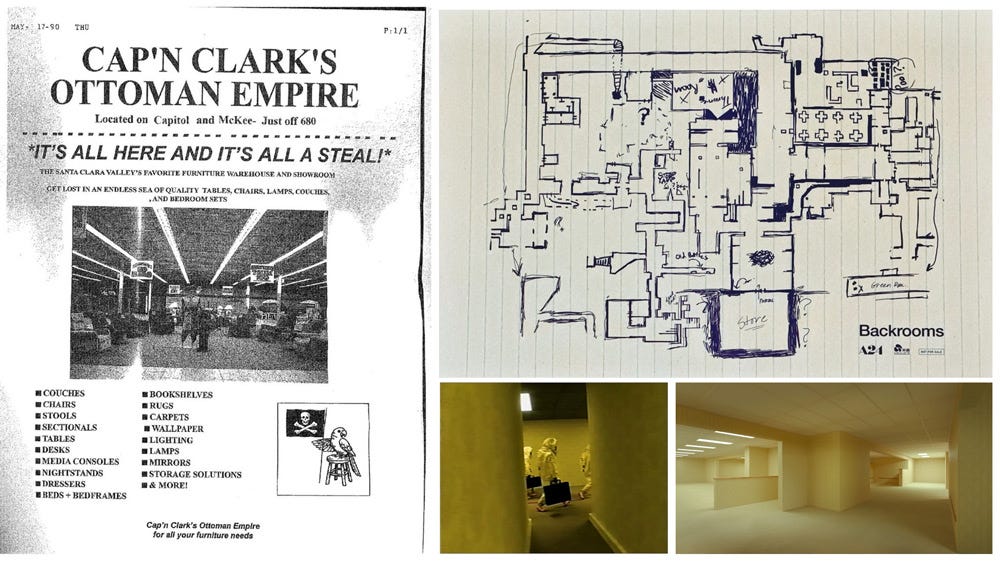
A24’s campaign for this film was sharp as usual. They are writing the book on disruptive marketing, and it’s different every time, setting them apart from the traditional tease, trailer, press tour, and massive media buy that bloats big studio movies.
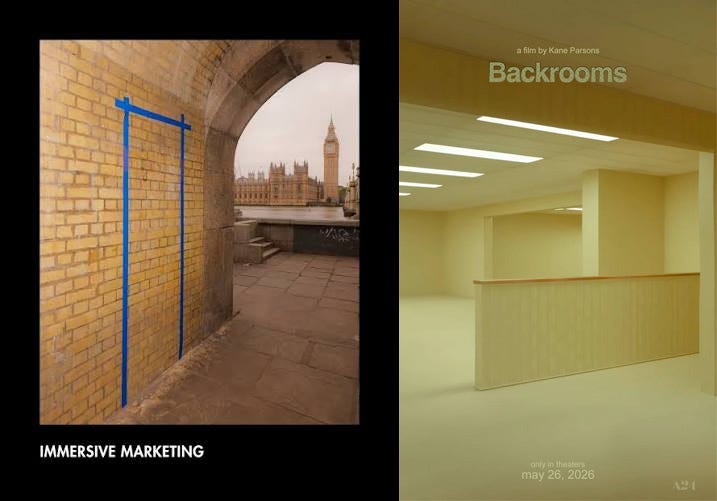
With this run, they leaned heavily into the chronically online subculture. A fake low-budget 1990s furniture commercial for “Cap’n Clark’s Ottoman Empire” led people to fax numbers, which printed out flyers to locations or new numbers, a rabbit hole that led to online archives and directory files like enter.txt and access.txt that unlocked an LA immersive popup and a secret ticket link. This was NOT a mass campaign. It was rich world-building placing fictional companies in our universe, akin to Prometheus’s “Peter Weyland TED Talk.”
As Matt Craig points out in The ‘Backrooms’ Phenomenon Is All Marketing, A24’s “secret sauce has always been to market a movie in whatever way draws the most attention, regardless of how much it may misrepresent the final product.” Niche goes wide by “making us feel like there was a secret among the young people that we’d better catch up on.”
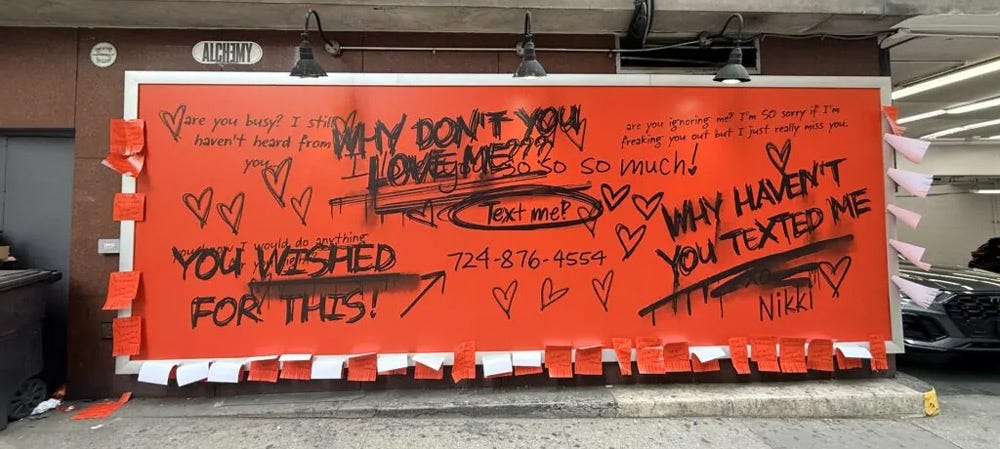
Obsession is the opposite. A new film with no fandom and no established subculture that snowballed via pure word of mouth.
Made for $750K and shot in about 20 days, it opened to $17.2M, then became “the first wide-release film since 1982 to grow its ticket sales two non-holiday weekends in a row after opening” (WSJ), the biggest second-weekend spike in modern times. The last film to do it was E.T. In a full-circle moment, Spielberg commented on both directors’ success at the premiere of his newest film Disclosure Day:
“I’m so happy for them. I think it’s so fantastic. I think it’s great that they had basically very little money, especially Obsession had under $1 million, and the other film had maybe 10 or nine, and they’re doing so well, and I just applaud them.”
Steven Spielberg, Deadline
As of this week, Obsession has grossed $224.7M worldwide, roughly 300x its production budget, making it Focus Features’ highest-grossing film ever, with the biggest fourth weekend ever for a horror movie.
Barker is now on a tear: tapped by A24 to reimagine The Texas Chain Saw Massacre, reportedly offered $10M sight-unseen by a rival studio, and signed with UTA.
The success of these films is also about understanding the wants and tastes of younger audiences. Gen Z is now the MOST active moviegoing demographic, inverting the “young people don’t go to theaters” conventional wisdom. 17 to 18-year-olds are “tired of superheroes, sequels and spinoffs” and “care considerably less about big-name stars and directors” (THR).
86% of Backrooms ticket buyers were under 35 (WSJ).
~44% of opening-weekend sales were to viewers UNDER 21 (Slate). Obsession’s audience is roughly three-quarters 18 to 35 (WSJ).
Movies like this come at a pivotal time in filmmaking. The decline-of-Hollywood story, dropping shoot days, writers strikes, AI existential threats, and a homogeneity of material needed a counter-narrative, a restart, a way to say yes, you can make niche great films, you don’t need a huge budget, and they can make a lot of money.
It should cause studios to re-assess how films are even made. TBPN broke this down well last week:
“The traditionally segmented teams on productions are simply too expensive to be deployed on anything but existing IP. New projects will come from filmmakers who have experience and a view for every part of the filmmaking process.”
The old guard can feel it. At Seriencamp this week, veteran exec Robert Franke described what these two breakouts mean for his cohort: “What a lot of people in my age cohort are experiencing is a loss of influence.” (Deadline)
Franchises will still dominate the calendar. We’ll still get Toy Story 5 and Spider-Man: Brand New Day. But studios need to see alternative solutions. Not to hate on He-Man, but it helps solidify the argument that Masters of the Universe bombed and The Mandalorian and Grogu cratered in the same window.
ASHERHYDE
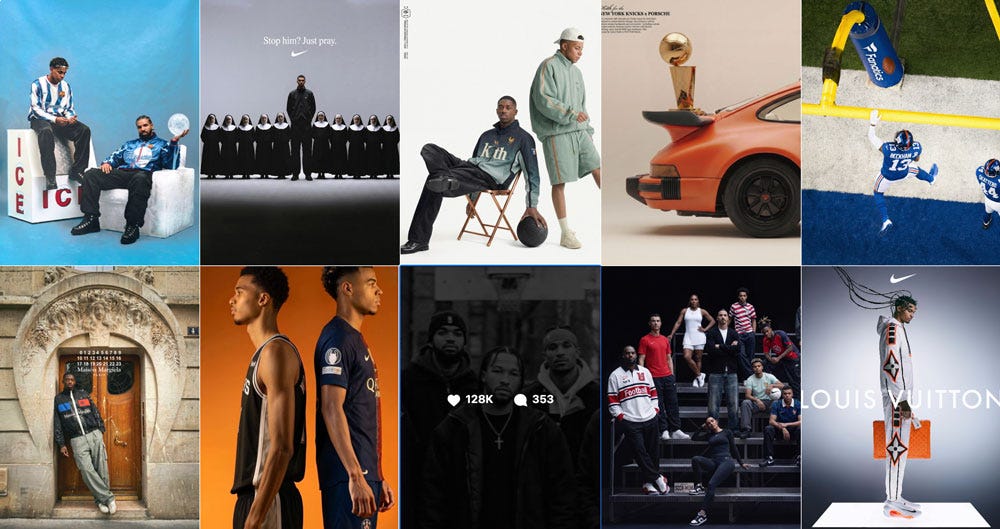
Adjacent to young Hollywood, the internet at large has made the world small and allowed anyone with good ideas to get them out and seen. Asherhyde, a design student at the University of Southern California, is blowing my mind with concepts for campaigns that would have been multi million dollar ads in the 90’s. He’s 20, he’s outputting prolifically, almost everything on his grid looks legit.


They feel real, they are real. Concept rich, they feel like you’d see them flipping through an archive magazine. Also, he’s not getting ratio’d for AI in the comments, the execution is so good its not reading slop, I see this as a perfect example of how the next generation is going to ideate with the tools at their disposal to put things out that feel big and polished for cheep.
This will quickly go from spec to brand endorsed. I predict within a year he’s either at a big shop or he’s on a Gabriel Moses trajectory doing these for real.
MFG TRIBECA GRILL 2027
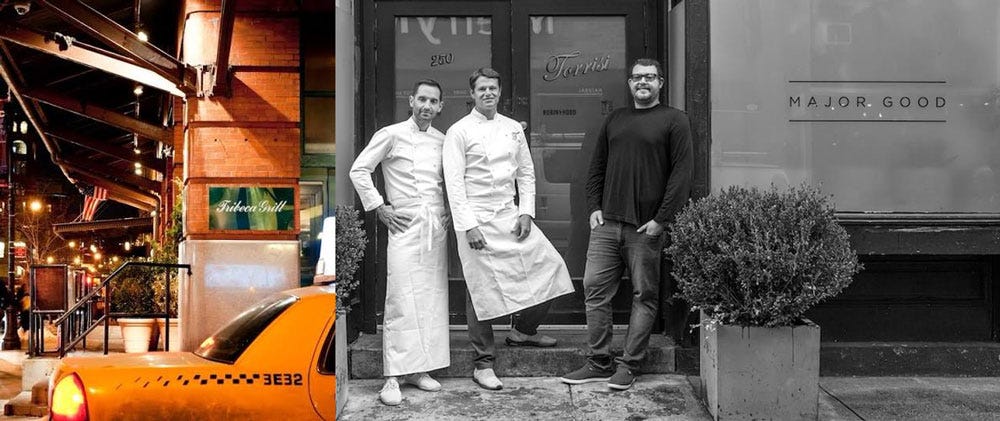
It’s official. After a few months of rumors, Major Food Group confirmed Monday they’re taking over the Tribeca Grill space at 375 Greenwich Street. Rich Torrisi is helming it, with Mario Carbone and Jeff Zalaznick as partners, and it’s a ground-up revisioning of the space: their take on an American tavern and steakhouse. As Torrisi put it to Eater, “in this city, a tavern can also have the polish of a grill and the seriousness of a great steakhouse.” Early menu development includes a Japanese veal chop he describes as “another version of a Milanese.”
I trust this institution in their hands. Robert De Niro and Drew Nieporent’s Tribeca Grill had a 35-year run before closing in March 2025. De Niro still owns the building and played a major role in revitalizing Tribeca into what it is today. The room isn’t sitting dark in the meantime: Chanel held its 19th Artists Dinner there Monday night, the first event of the room’s new era, De Niro co-hosting with Jane Rosenthal, Carbone in the kitchen, and the Knicks game playing on TVs around the room (WWD).
As a resident who lives a few blocks from here, I’m excited to get another option in the neighborhood. I’m also excited to see what the Rahman family (Beefbar) does with the old Sarabeth’s space, where the latest plan is Ludico, an Italian concept of their own (Tribeca Citizen).
The reformat is unfortunately a year away, MFG hasn’t even started demo yet, and the new room won’t open until 2027. But it’s happening.
FUJIKO NAKAYA PARIS
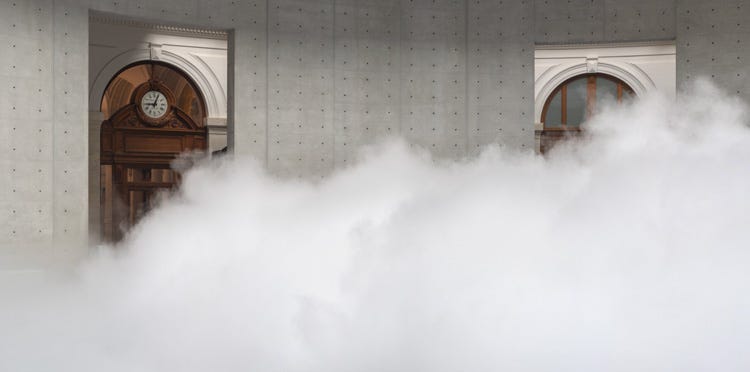
A site-specific living fog titled Cloud #07156 by Fujiko Nakaya fills Tadao Ando’s concrete rotunda at Paris’s Bourse de Commerce this summer. The centerpiece of the group show Clair-obscur, the installation is nothing but water, pressure, and air, shifting with currents and visitors’ body heat. The title comes from the code of the meteorological station nearest the Bourse. Impermanence and fluidity, juxtaposed against Ando’s iconic concrete, the most fixed material in the building.
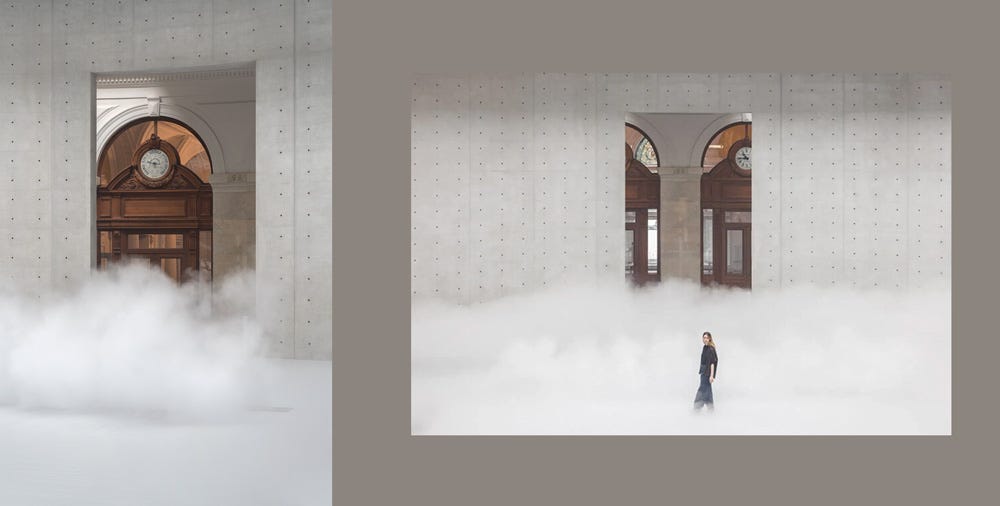
Nakaya invented water-fog sculpture, premiering her first cloud at the Pepsi Pavilion at Expo ‘70 in Osaka as a member of E.A.T. (Experiments in Art and Technology). She is the daughter of physicist Ukichiro Nakaya, who made the first artificial snow crystals.
Now 92, her work has had a heavy influence on Kanye’s atmospheric fogscapes in his live shows for the past several years.
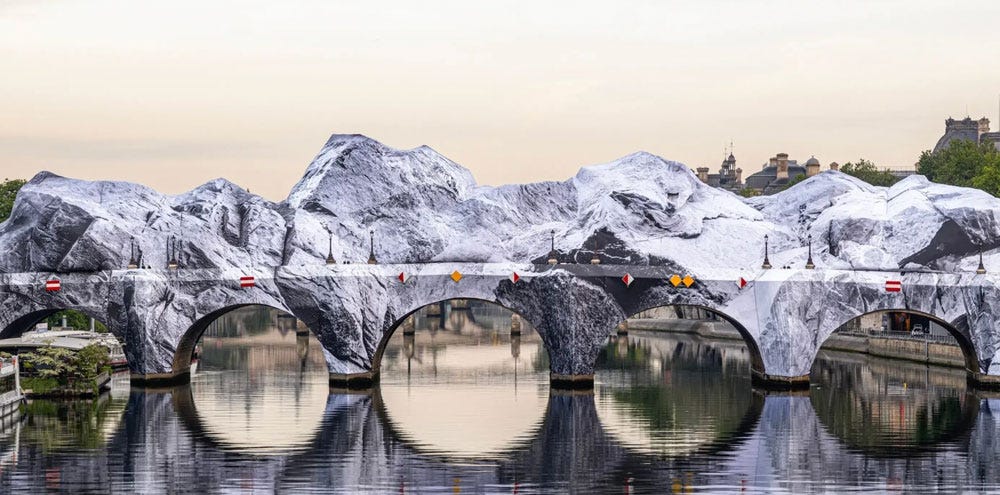
The exhibit runs June 4 through September 14, 2026. Between this and JR’s La Caverne du Pont-Neuf, due to open once early-June damage is repaired, it’s a great time to see large-scale art projects in the city of light.
The Bourse has long been a stage for great creative moments: Saint Laurent menswear and Boursier-Mougenot’s Clinamen last June, Kimsooja’s mirror room in 2024.
APPLE: DESIGNERS OF TOMORROW PARIS
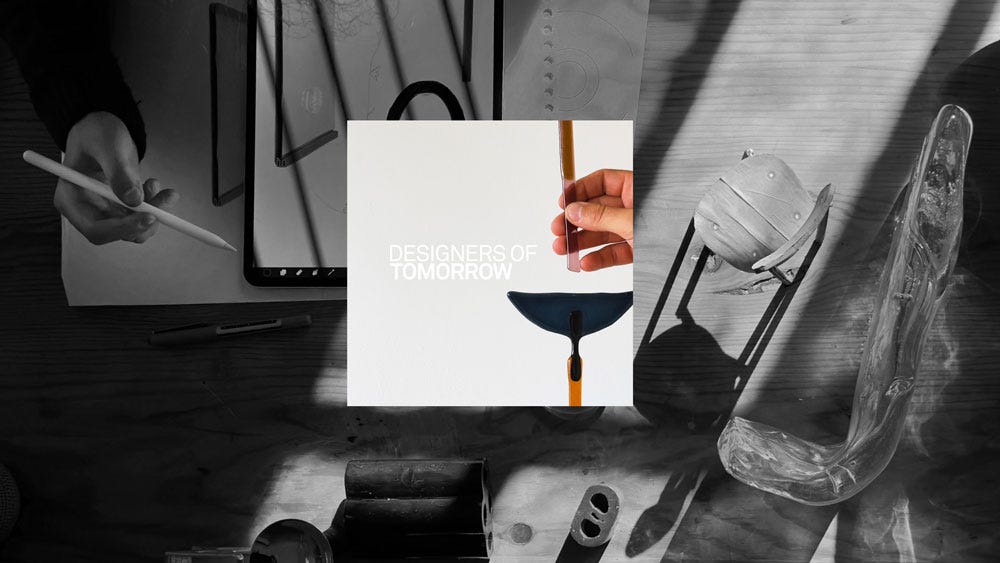
Apple is returning to Design Miami.Paris (confusing name, yes) with its Designers of Tomorrow program this October, its second year partnering with the fair to commission and exhibit work by four emerging designers.
This year’s theme is “Design for Presence,” framed around slowing down, mindfulness, and holding attention. Poignant and appropriate. It’s nice to see this from Apple, of all the tech companies they feel suited for something deliberately analog and focused on craft, despite their core business being the ultimate attention-capturing device. Design Miami CEO Jennifer Roberts leans into the same tension:
This year’s selection is made by a 10-member jury led by Rodman Primack (co-founder, AGO Projects). Each juror nominates four designers who have practiced fewer than 10 years, then the pool is narrowed to a final four (Dezeen). Apple’s head of industrial design, Molly Anderson, and Roberts both sit on the jury, alongside Nigerian designer Nifemi Marcus-Bello and curatorial voices from SFMOMA and the Judd Foundation.
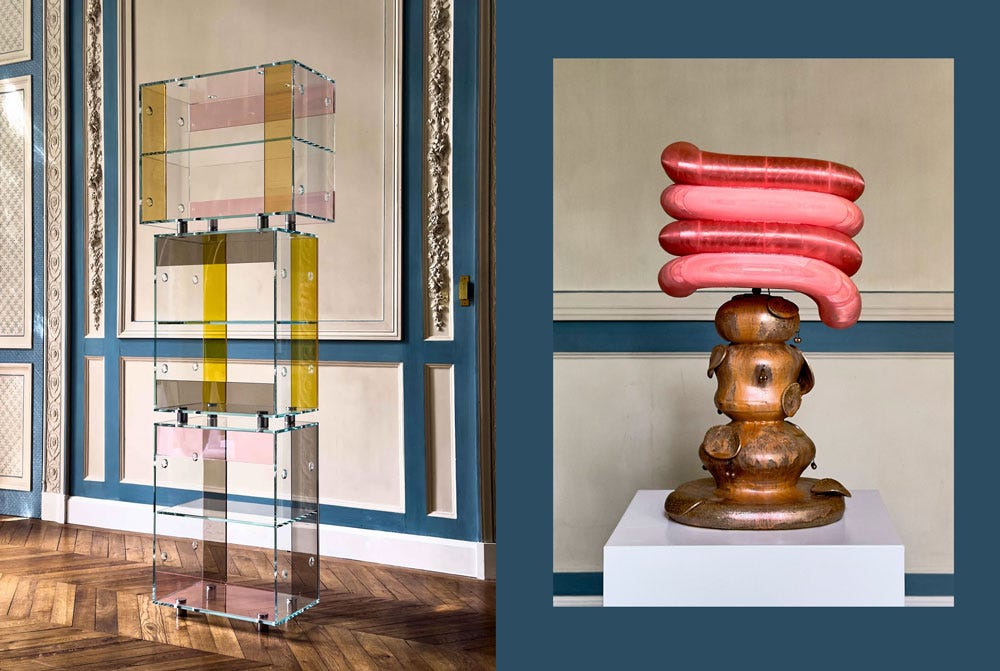
2025’s inaugural edition platformed Marco Campardo (London; a coffee table built to look like a block of butter), Paris duo Marie & Alexandre (Marie Cornil and Alexandre Willaume; modular glass objects), Shanghai-based Atelier Duyi Han (the Noetrigram v0.9 mirror), and Vietnamese-American ceramicist Jolie Ngo (a Lantern Vessel and table lamps). The connective tissue: all four used iPad in their creative process. The patronage doubles as a quiet demonstration of the iPad as a designer’s tool.
Design Miami has long been one of my favorite aspects of that art week, and their successful expansion to Paris, alongside the rise of design fairs like Milan’s Salone, continues to establish design as a true artistic vertical. Last year Salone surpassed 300,000 visitors across more than 2,000 exhibitors. As I wrote back in issue #13, design week actually surpassed Miami art week visitors last year.
MARTIN MARGIELA’S PERSONAL ARCHIVE
On July 9th, Martin Margiela, 69, reclusive, no children, now a full-time fine artist, will personally auction more than 150 lots from his own archive in Paris, run by Maurice Auction with London’s Kerry Taylor Auctions. As Maurice Auction puts it:
“This is the first time a living creator has directly collaborated with an auction house to offer their personal archive of clothing and designs.”
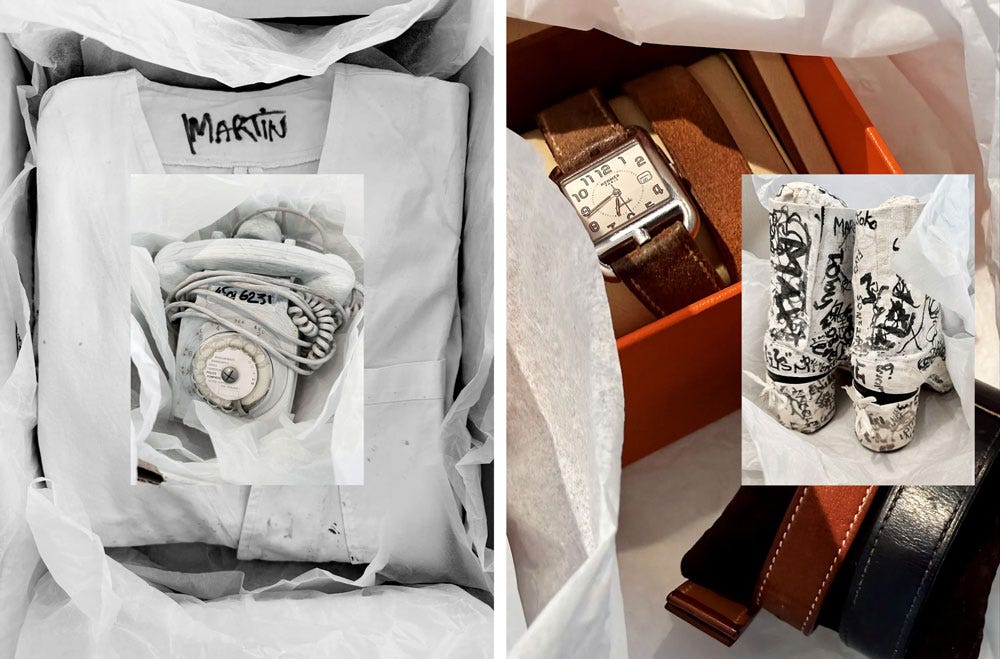
To see a living artist curating and releasing a body of work like this is interesting, and I love that he’s involved with the curation. Retrospectives like this typically come posthumously, like “Virgil Abloh: The Codes” at the Grand Palais (2025), which drew 58,000 visitors and showed pieces from a roughly 20,000-item archive. Margiela sits alongside Abloh as one of the most referenced and obsessed-over creatives. For creatives and designers, this will be a wonderful look into his mind.
“After many years of moving archival material from place to place and subsequent loans for exhibitions, I felt it was time to let go of a part of my fashion memorabilia.” — Martin Margiela, official statement (Harper’s Bazaar, 2026)
It’s not an estate sale and not a liquidity grab. He’s alive, and he’s curating it himself in a very meticulous and analog fashion. The artist doesn’t use telephone or email; the entire process, more than a year in the making, has happened through face-to-face conversations. Refreshing in 2026.
SEARCHSYSTEM
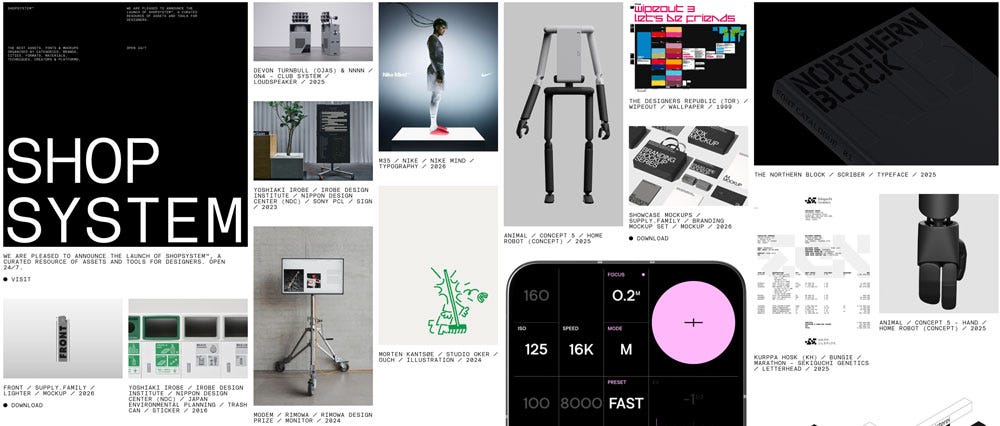
In the spirit of sharing resources, I recommend a bookmark of SEARCHSYSTEM, a designers archive, skewing heavily towards futurism, industrial and product design with sharp curation.
Unlike a lot of ‘mood’ reference sites, the credits are tight, you can find the talent behind the work, making its an extremely valuable tool.
MINIMAL LEGENDS
This museum-grade group show at the Vincenzo De Cotiis Foundation (Palazzo Giustinian Lolin, San Marco) is exactly the aesthetic I align with as a painter.
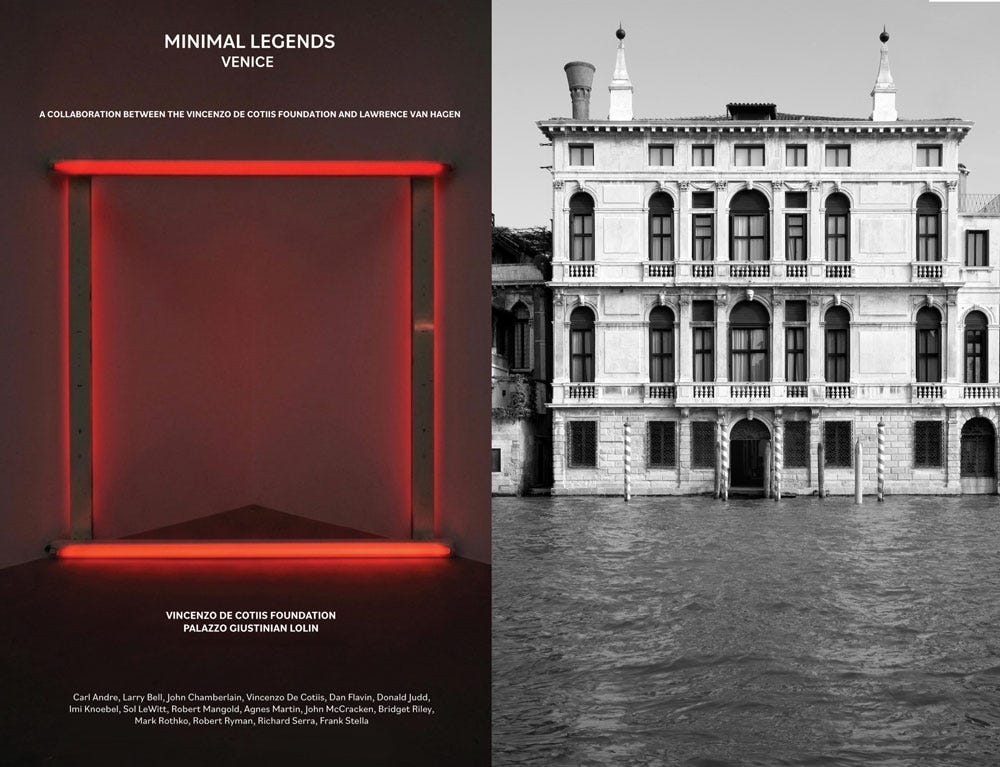
Running 6 May through 3 October 2026, by appointment only and timed to the 61st Venice Biennale, Minimal Legends features seventeen works by seminal Minimalist and adjacent-movement artists and two works by Vincenzo De Cotiis chosen for the occasion, plus foundation-collection pieces, including Anne Imhof, that remain on view. The show is co-curated by Claudia Rose De Cotiis, the foundation’s president, and Lawrence van Hagen of LVH Art.
This is a blue chip experience, bringing some of the most iconic minimal artists into one space: Donald Judd, Carl Andre, Dan Flavin, Sol LeWitt, Larry Bell, Mark Rothko, John Chamberlain, Agnes Martin, Bridget Riley, Robert Ryman, Richard Serra, Frank Stella, On Kawara. The conceptual spine is Donald Judd’s 1965 essay Specific Objects, which traced a line from Rothko’s color fields to the object-based work of Judd, Stella, and Chamberlain. The hang follows that lineage: Judd’s Untitled (1986-87) in aluminium and yellow Plexiglass, Stella’s Scramble: Green Double / Left N, Right 8 (1977), and Carl Andre’s Fifth Copper Square (2007), twenty-five copper plates laid flat on the floor.
A way to experience Minimalism not as a historical retrospective, but a “living language” that continues today.
STUDIO PRACTICE
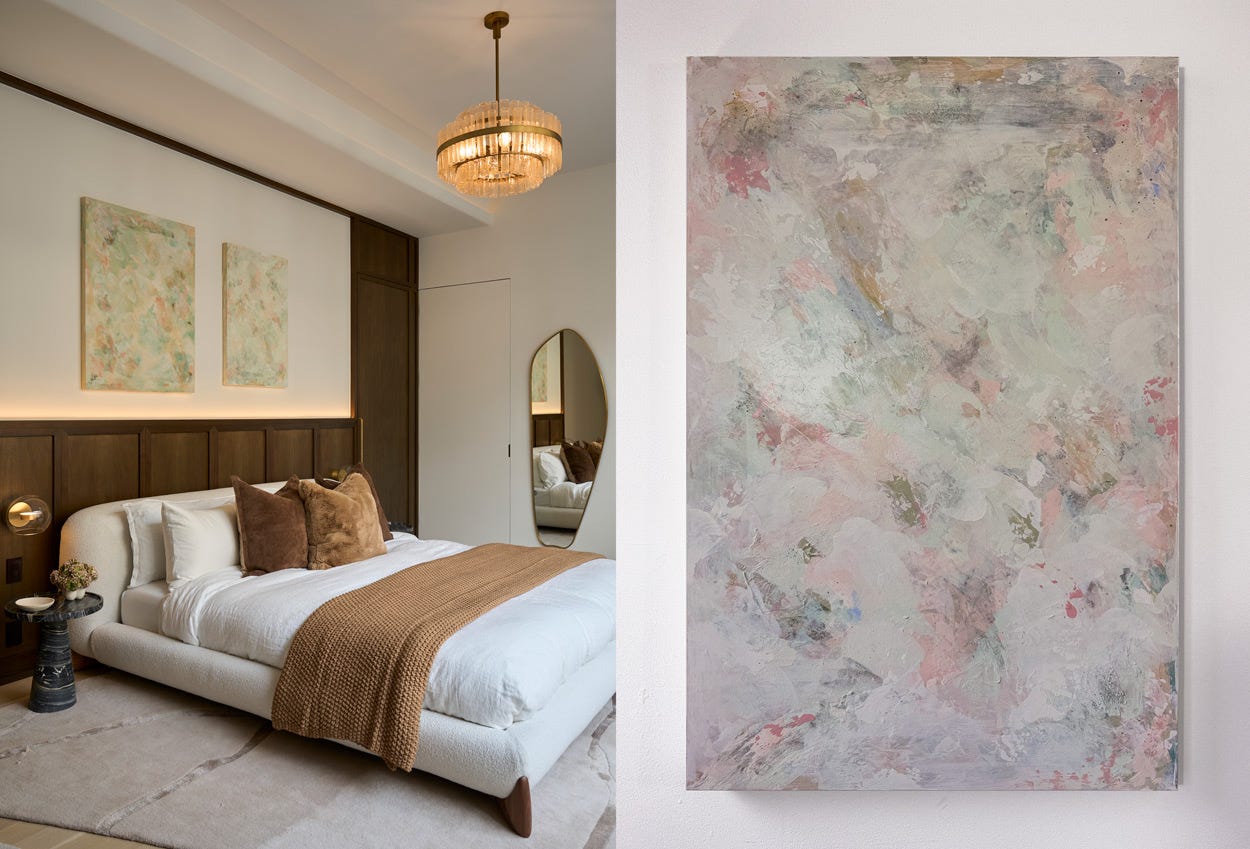
A Tribeca residence designed by Studio Isaac placed two spring dream pieces. I love working with interior designers and am looking to build relationships with more, if you have a practice, or know anyone great I’d love an intro.
More of my work and process on my studio site.
THE WORK OF STEPHANIE STAMATIS
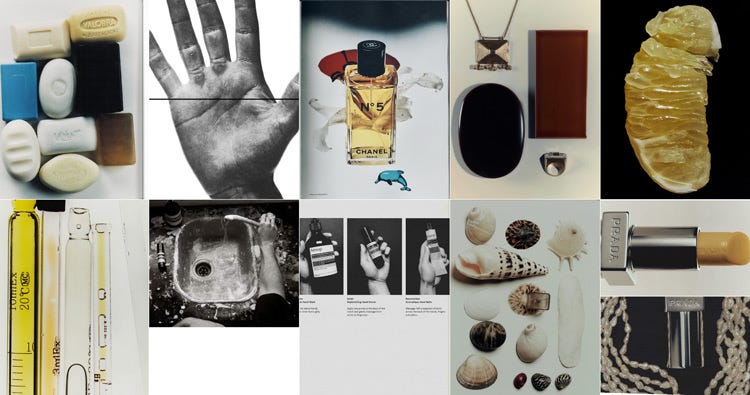
Another star young talent that feels beautifully tactile and analog in a digital world. The still lifes, set design and art direction of Stephanie Stamatis.
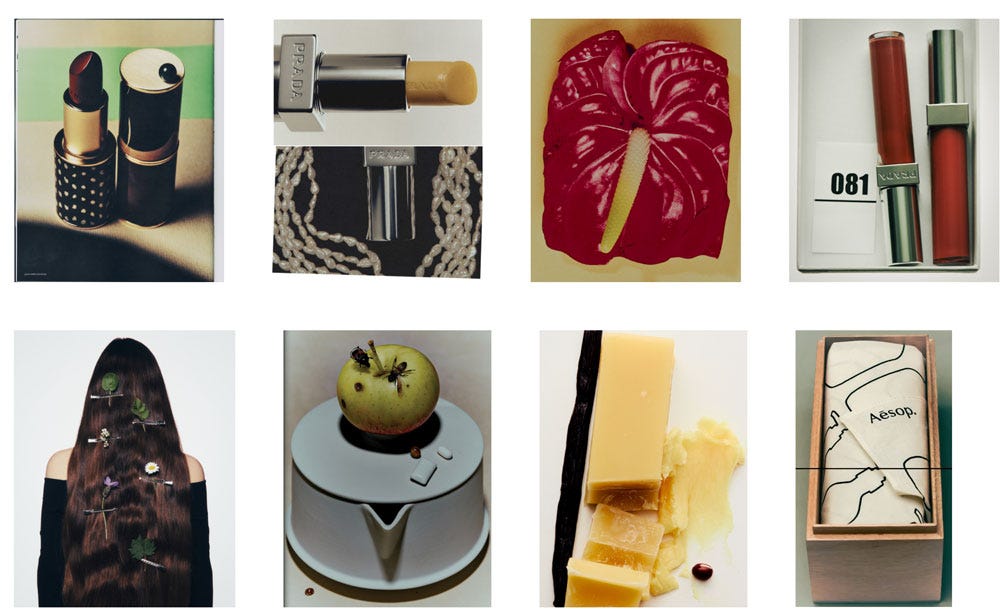
The work is rich, her understanding of color and the ability to wield it with nuance exudes luxury. She’s sitting high on my list of people to work with this year.


FLORAL WORK OF FRIDAKIM
Working in events I have an obsession with artful florists. There’s bizbash wedding florist vibes, and then there are floral artists. Often one of the most expensive aspects of a production, good florists can elevate an entire space, florals are absolutely an art form.

London based Frida Kim is case in point. From massive installations to tablescapes, these are sculptural works of art. Another resource I’m happy to share.
TOKENMAXXXING VS ROI & SPEND
“People are really saying, you know, it’s kind of a meme now, but ‘My company spent my entire 2026 budget in Q1. Can you make this more efficient?’”
— Sam Altman, OpenAI’s “Intelligence at Work” enterprise event, June 2
The most dominant topic in my feed this week is the 180 on Tokenmaxxing, a pivot to cost awareness as everyone’s AI bills shoot through the roof. We haven’t even exited the subsidized era and companies are already blowing through their AI budgets.
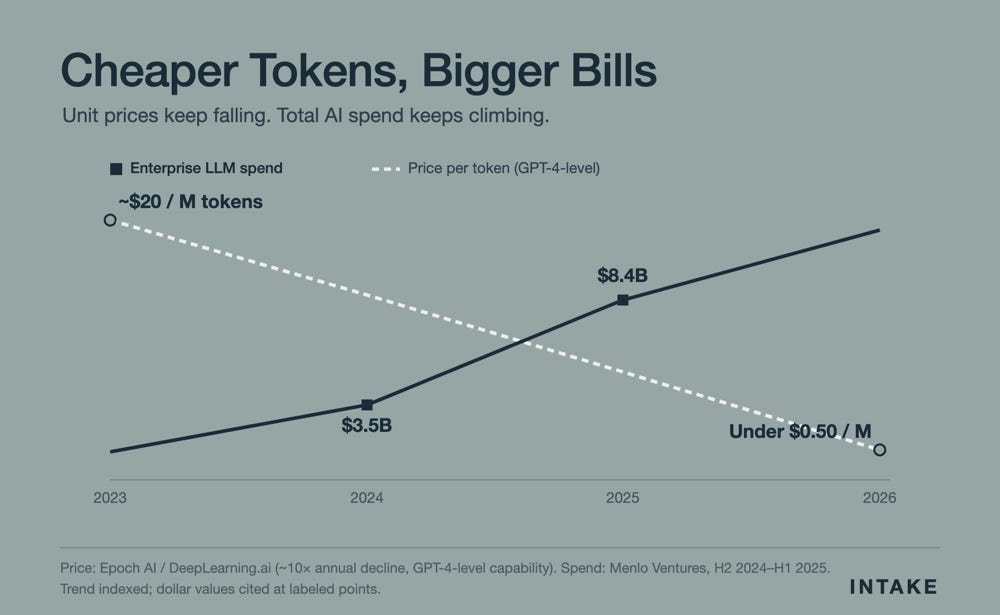
This is a reversal of the Q1 narrative, when everyone was racing to push AI into every corner of the business, adoption everywhere all at once. Jensen Huang saying he’d be “deeply alarmed” if a $500K engineer didn’t burn $250K in tokens is now getting quoted back against a wave of cost panic.
Uber torched its entire 2026 AI budget in four months. Its COO, Andrew Macdonald, said the link between rising Claude Code use and consumer-facing shipping “is not there yet.” Microsoft is killing Claude Code licenses across its Windows and Office division by June 30, though that one reads as much a strategic play to push employees onto its own product, Copilot. One Anthropic employee ran up $150,000 of Claude Code in a single month. JPMorgan has employees “spending more on tokens than their salary.” Amazon scrapped its internal usage leaderboard after engineers gamed it with junk tasks. The idea of a spend leaderboard, in hindsight, was asinine. Most companies aren’t tracking spend in real time either.
We’re discovering at scale that usage doesn’t equal ROI. The engineering-analytics firm Jellyfish found the highest-token-spending engineers used 10x more tokens but were only 2x more productive, which falsifies the Huang formula directly.
In my own company, the first month we rolled out Claude Enterprise, our teams maxed out the monthly spend by June 6th.
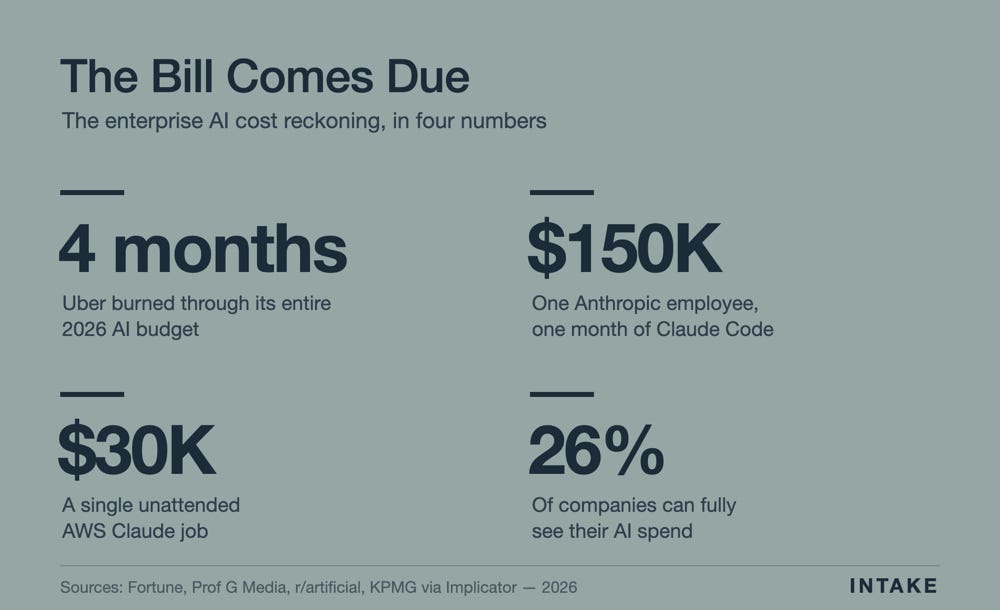
The wild numbers are forcing a reassessment of blind usage.
“Every new technology requires an extended period of trial and error, as organizations toggle between (a) not enough experimentation or spending, followed by (b) too much.”
— Derek Thompson, “The Great AI Cost Panic of 2026,” May 29
Smart companies will get ahead of what’s coming. We’re still very much in a subsidized phase. On June 15, Anthropic moves agent and programmatic Claude usage off its flat-rate subscription pools onto separate metered credits billed at full API rates. Costs are about to rise for anyone running heavy automated usage.
The story isn’t “AI is too expensive.” It’s that the incentive structure was pointed at the wrong metric, and the correction is now hygiene: spend tracking, model routing, and killing redundant burn.
Continue reading: the four practices I run to keep AI spend in check, right-sizing models to the task, metering every call, and watching the always-on jobs where runaway bills hide, plus why this correction is an existential risk to the frontier-model business right as Anthropic goes public. Then Martin Scorsese, 83 and the patron saint of celluloid, backing an AI image lab and. Prada and Axiom’s 500-hour moon suit for Artemis. And Apple Maps going photoreal in iOS 27.
If you’d like a free subscription, feel free to reach out on why, I’ll most likely be happy to oblige. Many readers expense INTAKE as a professional resource. Here’s a template if that’s helpful.
