

INTAKE 49
Belmond chose excellence over growth. Affleck built an AI company in stealth for three years. Anthropic vacated the government position it built. SpaceX files at $1.75 trillion. China's newest Antarctic station.

"At Belmond, your time is invested, not spent."
— Dan Ruff, CEO, Belmond
I’ve been thinking about what separates the businesses that compound from the ones that just grow.
The defining competitive move right now isn’t growth for growth’s sake, it’s entrenchment. The players with staying power aren’t the ones with the most options, they’re the ones holding positions that can’t be replicated at any price. Infrastructure nobody else could afford to build. Presence on frozen continents twenty years before the ice melts and the resources become worth fighting over.
Growth is a number. A moat is a position. Something that gets harder to dislodge the longer you hold it. Heritage. Infrastructure. Territory.
The most instructive story this week isn’t about who built the biggest moat. It’s about who built one and then walked away from it.
Every big story this week is some version of that play:
Belmond’s CEO has stripped growth targets entirely, running 47 properties on excellence metrics instead of expansion. SpaceX files for the largest IPO in history at $1.75 trillion, built on 20 years of launch infrastructure controlling 80-90% of global capacity. China announces its sixth Antarctic research station, staking territorial claims on a frozen continent before the treaty governing it comes up for review in 2048. Anthropic built the government AI moat first, then vacated it on principle, handing OpenAI the position. Zuckerberg drops $170M on Billionaire Bunker Island. Ben Affleck sold Netflix a filmmaking AI company he’d been building in stealth since 2022. New York moves to ban LLMs from legal advice. Robinhood launches a platinum card and discovers why AmEx has a 97.5% retention rate.
DESIRABILITY OVER GROWTH
“I’m probably the only CEO in hospitality that’s not targeted on growth. There are no growth targets. There are excellence targets.”
That’s Dan Ruff, CEO of Belmond, running what might be the most enviable playbook in hospitality.
Since LVMH took Belmond private for $3.2 billion in 2019, the world’s largest luxury conglomerate has effectively told its hotel arm to slow down. The result is a strategy built around excellence metrics instead of expansion. Possible only because LVMH doesn’t need Belmond to be profitable at scale, and because Belmond owns nearly all of its 47 properties across 28 countries outright. Both matter: the ownership model means no franchisee pressure to cut corners, and the conglomerate model means Dior spas and Louis Vuitton cafes at Belmond properties generate value as showrooms across LVMH’s portfolio. Things independent hotels simply can’t replicate.
“Slow luxury” is a long game, as Ruff defines it, “is not about speed, and it’s not about the length of time. It’s about the quality of time.”
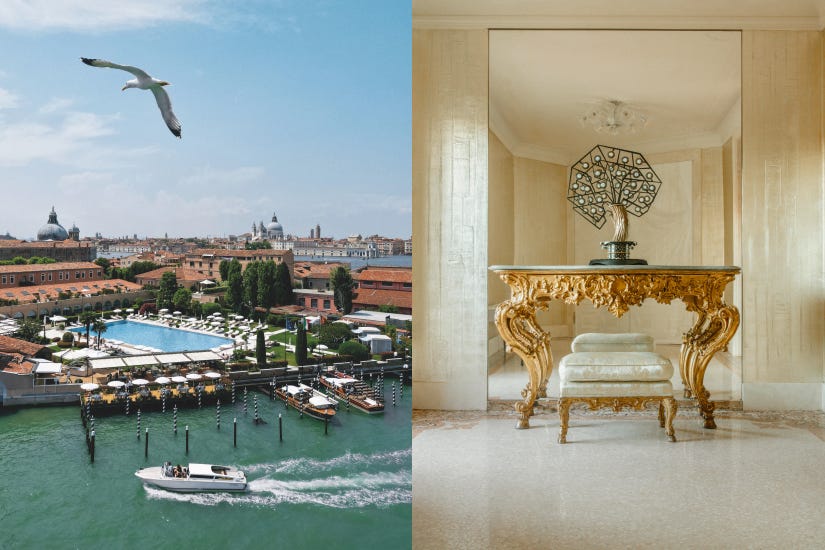
In practice, that means renovating the Hotel Cipriani (Peter Marino redesign, with a Dior Spa opening this spring) over multiple off-seasons, so the property never closes on guests who’ve been returning for decades. It’s considerably more expensive but the relationship preservation is crucial.
The business case backs the philosophy. The Bain-Altagamma 2025 study shows hospitality accounting for ALL net market growth in luxury since 2023, while personal goods are forecast to contract 2–5% this year. About 50 million aspirational consumers have exited the market over the past two years, the tier that was propping up the goods business. The people still spending are spending on time, not things.
McKinsey projects global luxury accommodation growing from $240 billion in 2023 to $390 billion by 2028. Belmond is structurally built for exactly this world.

That world is timeless and in many cases one-of-one. The Venice Simplon-Orient-Express runs carriages built in the 1920s and 30s. The Copacabana feels as storied today as when it opened in over 100 years ago and The Mount Nelson in Cape Town has been pink since 1918 (it has its own Pantone shade). You can’t build that, you can only inherit it.
“At Belmond, your time is invested, not spent.”
MATTER & SHAPE
Matter and Shape returns to the Jardin des Tuileries for a third year, smartly overlapping with paris fashion week.

Dan Thawley and founder Matthieu Pinet oversee curation of the design salon which is a more bespoke experience than larger fairs. Two tightly curated pavilions mixing emerging studios with established contemporary design houses.

Standouts this year: Byredo scent vessels and overarching partnership, A program of talks curated by Monocle, This Agreement, a group exhibition by @espaceaygo , @nicolas.zanoni , and @isbn.billy.
MATTE’S CREATIVE SHARE-BACKS
Bi-weekly, our entire creative team meets for the sole purpose of sharing cool shit we’re seeing. From talent we want to be working with, to campaigns we respect, openings, albums and interesting things across the creative spectrum. The team keeps me fresh, it’s my favorite meeting of the week.
Two standouts from this week;
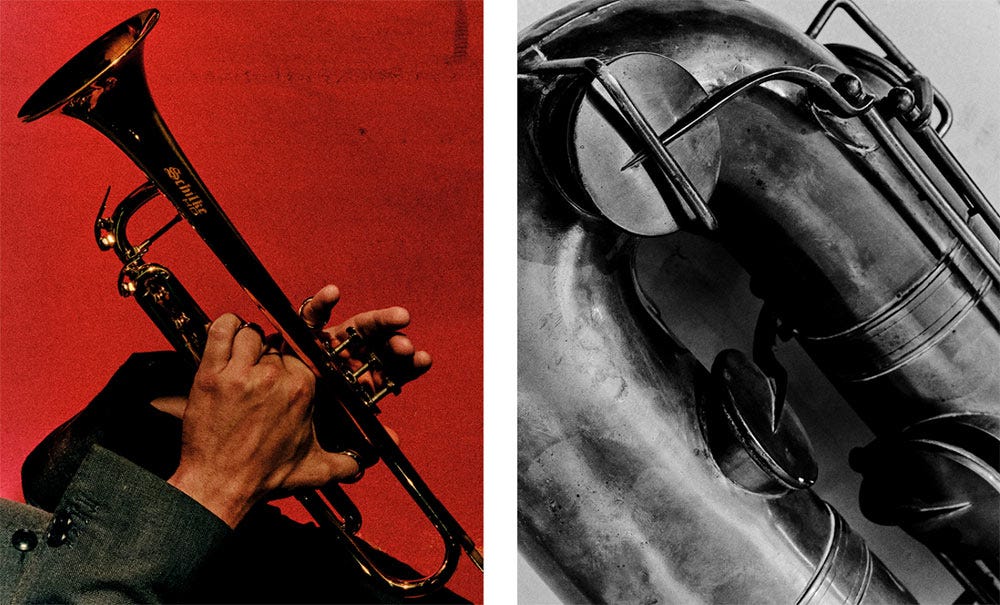

Austrian photographer working between Berlin, Paris and Vienna.

They run a party outside this studio set, then bring different people in for the live stream portion of it. Lot Radio, Colors, Boiler Room vibes, with a cool angle. Getting good talent as well.
MAXWELL GRAHAM | HANS HAACKE AND LOUISE LAWLER
“The times when an artwork is made and the times when it is exhibited is important.”
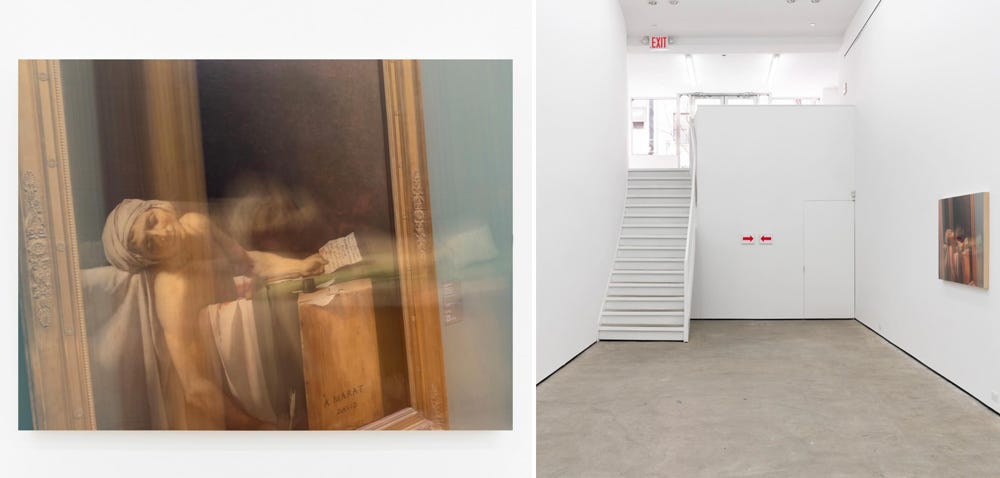
Louise Lawler | Before/During/After (Green), 2024/2025
A Timely recontextualization of Jacques-Louis David’s masterpiece The Death of Marat (1793), painted during the French Revolution. A take on political martyrdom in artwork on display at Maxwell Graham’s latest exhibition of works by the artist alongside Hans Haacke.
Exhibit runs March 5 - Apr 18, 2026
Maxwell Graham | 55 Hester Street New York, NY 10002
PACE PUBLISHING
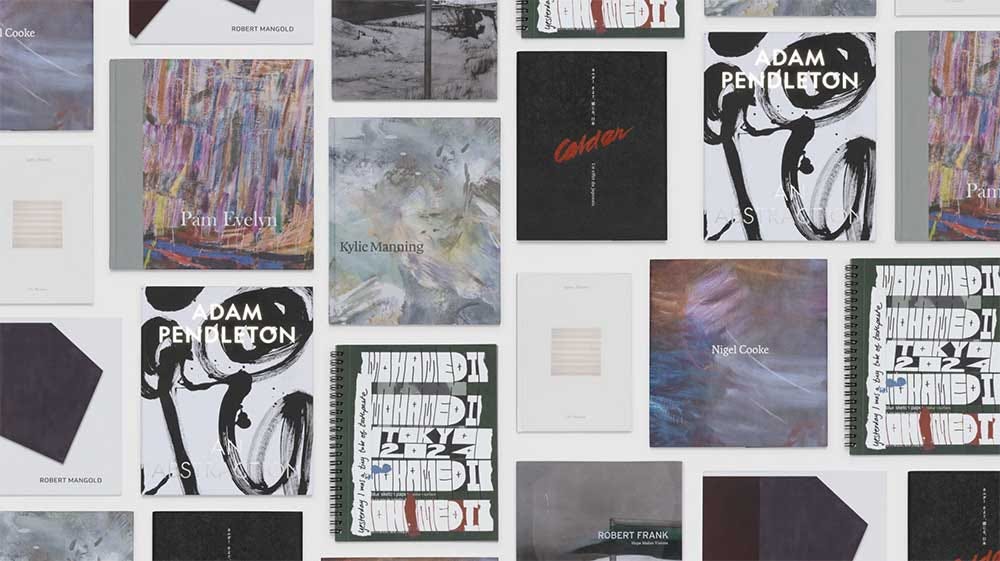
Often overlooked, but a great point of access to art in the form of books, Pace publishing is one of the longest standing gallery imprints. A great source for art books, with constant releases. A small taste;
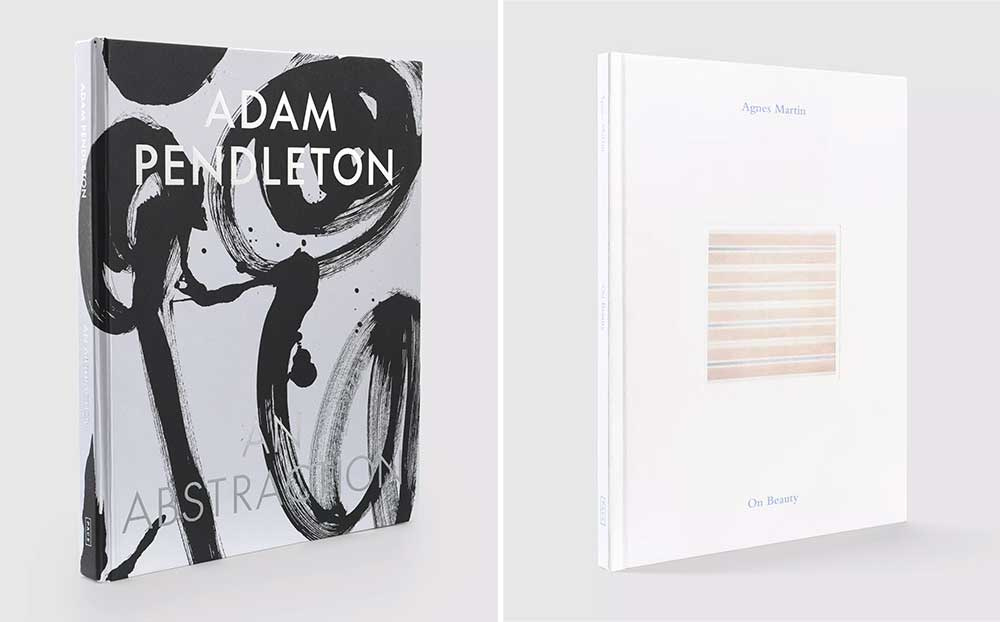
Agnes Martin - On Beauty. A collection writings by the artist centered around the theme of beauty. Martin’s work highly influences my own, primarily her exploration of color and design, and their relationship with painting.

Calder - Un effet du japonais. Japanese posters, covers, and publications always just LOOK better. Focused on Calder’s first exhibition in Tokyo in nearly 35 years.

Adam Pendleton: An Abstraction. The Artists first solo show at Pace’s New York gallery in ten years.
EDITO TYPE

One of our Art directors just put me on to Edito Type, an independent Paris-based foundry.

Circa stands out, as does Moca. The foundry currently has 3 fonts online, but do commissions and custom type work as well as merchandise.
STUDIO PRACTICE
Recent works, studies in blue.
More of my process and painting practice on my studio site.

THE STANZA’S EVOLUTION
Nadine Choe’s The Stanza was one of my favorite additions to my media diet last year. She covers hospitality from an investor’s lens drawing from a decade of experience in real estate private equity. Choe pulls guests you won’t find on a standard travel podcast. For an entry point, start with her conversation with Ian Schrager.
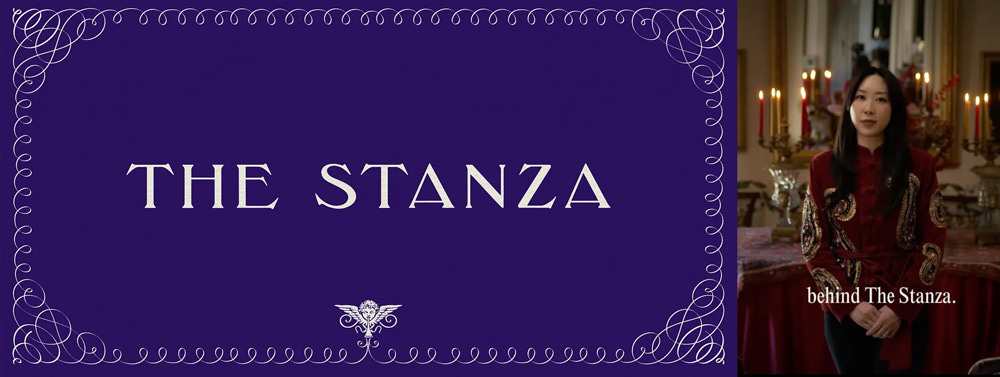
Choe isn’t reviewing hotels; last year she analyzed why Soho House’s membership model works (or doesn’t), what makes the Standard’s brand positioning distinct, why Flyfish Club’s blockchain play matters. As someone working tertiary to hospitality I find her podcasts uniquely focused on the business and I was equally impressed with the caliber of her guests.
Her new season, focused on the business side of hospitality, is teasing right as Substack officially launches its TV app on Apple TV and Google TV. The timing is either perfect or coincidental. Substack is making a major push into Video with 82% of Substack’s top 250 creators now using audio and video, up from 50% a year prior.
“Despite what you might hear, people still read, we would know. But they watch video too, and sometimes that video is best on a TV.”
Chris Best, CEO, Substack (Hollywood Reporter)
Choe may be well positioned here, she already has 91.5K TikTok followers and podcasts, so she’s not starting from zero on video.
At the same time I hope she continues to focus on long form writing and podcasts.
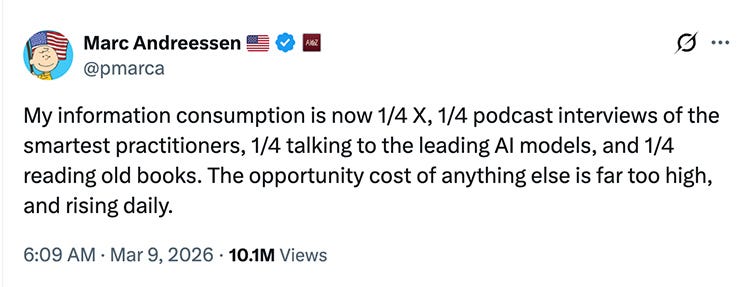
This andreessen comment on his current media diet is spot on. Showing the evolving role of AI in daily workflows, the role podcasts play in todays information flow and the premium on high-value information sources.
BEN AFFLECKS AI ACQUISITION
A week after walking away from Paramount, Netflix announced a very different acquisition, on March 5, the acquisition of InterPositive, Ben Affleck’s AI filmmaking company, along with its entire 16-person team. Deal terms were undisclosed. The same week, Artists Equity (his production company with Matt Damon) signed a multi-year first-look streaming deal with Netflix.
Affleck had been building in stealth since 2022. Before ChatGPT launched publicly. Before the WGA and SAG-AFTRA strikes. He didn’t mention the company publicly until the morning of the sale, when he released a video and joint statement with Netflix.
In the video Ben speaks of being exposed to early precursors of AI and its profound effects on VFX which scared him, leading to him wanting to shape this technology rather than ‘letting it happen to him’.
InterPositive is not generative AI. It works with footage you’ve already shot, wire removal, relighting, reframing, continuity fixes, trained on proprietary datasets from controlled production environments.
While his ownership of an AI company was a complete surprise, if you were paying attention Ben has shown prolific understanding of the tech. His public statements over the past two years now read like a thesis defense for what he was building.
At the 2024 DealBook summit:
“I wouldn’t like to be in the visual effects business. They’re in trouble and what costs a lot of money is now going to cost a lot less and it’s going to hammer that space. And it already is.”
Ben Affleck
On Joe Rogan in January he demonstrates deep technical understanding explaining AI better than people expected: “If you try to get ChatGPT, Claude, or Gemini to write you something, it’s really sh***y, because by its nature it goes to the mean, to the average.” He was narrating the problem he was already solving.
The acquisition gives Netflix proprietary production tools no other streamer can offer its creative partners. For context on scale: post-production accounts for 20-40% of film budgets. Netflix spends $20 billion annually on content. Even a modest efficiency gain across that spend is substantial.
The broader Hollywood response is landing on very different sides.
In the same week, Doug Liman (The Bourne Identity, Edge of Tomorrow, Mr. & Mrs. Smith) announced he is shooting Killing Satoshi starring Pete Davidson and Casey Affleck with zero physical locations, all AI-generated environments. Casting notice disclosed producers reserve the right to “change, add to, take from, translate, reformat or reprocess” performances using generative AI, including adjustments to lip, facial, and body movements. These new contract terms mean actors and crew who refuse AI terms may not get hired.
James Cameron has been threading this needle publicly, calling AI essential for “cutting VFX costs in half” while insisting this means “doubling speed, not laying off half the staff.” His position shifted harder in November: “They can make up an actor... that’s the opposite of what we’re doing.”
Avatar 3: Fire and Ash will open with a title card stating no generative AI was used in its making.
SAG-AFTRA’s theatrical contract expires June 30. AI is the central negotiating point. IATSE formally declined to comment to NPR on the InterPositive deal, their members, colorists, VFX artists, editors, are the most directly exposed. Industry projections put over 118,500 entertainment jobs at potential AI displacement risk.
Affleck’s status in the industry carries extra weight, he’s trying his best to advocate for the responsible use of AI as an enhancer not replacer, his tools build on filmmakers proprietary materials.
“I understand the skepticism because I share it…Instead of letting this technology happen to us or the industry, we’re choosing to shape it.”
Affleck in his ‘state of streaming’ video release with Netflix.
The question his audience in Hollywood is now sitting with: was he the one shaping it, or did he just shape the narrative around selling it?
SPACEX IPO NEXT MONTH
“SpaceX is poised to raise more money in its IPO than was raised in last year’s 90 IPOs combined.”
Fortune headline/analysis (Fortune, March 5, 2026)
SpaceX filed confidential IPO paperwork with the SEC, targeting a $1.75 trillion valuation, the largest IPO in history. The filing comes one month after SpaceX completed the largest private acquisition ever, absorbing xAI for $250 billion in an all-stock deal that valued the combined entity at $1.25 trillion. SpaceX was at $800 billion on the secondary market in December 2025. That’s a 119% valuation increase in 90 days.
Musk has reportedly timed it to coincide with the alignment of the stars.
SpaceX and OpenAI IPO’s are going to be wild valuations next year.
This is a case study in narrative-driven valuation. At $1.75 trillion, SpaceX carries a 62-97x revenue multiple, an extraordinary number for a hardware company that blows up rockets, merged with an AI business that incinerated $9.5 billion in nine months on $250 million in revenue.
For context, Legacy aerospace trades at 1.5-3x sales. We’ve entered a new era where valuation is a narrative exercise detached from financial gravity, but it’s also an unprecedented frontier. SpaceX has a considerable moat in the complex business of space. 80 or 90% of launch capability now is controlled by one company, and Starlink, the primary driver of value with 10 million subscribers as of February 2026, controls nearly two-thirds of all active satellites in orbit.
Investors anticipate that a public SpaceX would provide a capital safety net to supercharge xAI’s growth in a market where it trails OpenAI & Google.
This IPO is the beginning of consolidation of Musk’s empire into a single tradable instrument (if tesla roll up rumors come to fruition), and a level of vertical integration not seen since Rockefeller’s Standard Oil. Bloomberg reported in January that Musk weighed merging SpaceX with Tesla before choosing xAI instead, but the door isn’t closed. Tesla put $2 billion into xAI and signed a collaboration agreement that lets Musk move capital and technology between his companies without triggering the regulatory scrutiny that a formal merger would. Wedbush’s Dan Ives gives it 12-18 months before Tesla gets folded in.
Musk controls 42% of SpaceX but only 18% of Tesla, which means any merger between his own companies will favor the one where he has more skin in the game.
Bloomberg estimates the IPO would push Musk’s net worth to $950 billion. Kalshi gives 64% odds he becomes a trillionaire by 2027.
The part most financial coverage is skipping.
The valuation assumes SpaceX’s dominance is permanent. But we’re in the early stages of a three-way moon race between SpaceX, Blue Origin, and China and the one dimension where Bezos can actually catch Musk is the one that matters most right now. Starship can’t refuel in orbit yet, and getting to the moon requires at least 12 tanker flights in rapid succession, a maneuver never attempted at this scale. Blue Origin’s lander doesn’t need orbital refueling at all. It flies straight to the moon on a single launch.
Blue Origin CEO Dave Limp told Bloomberg the company will “move heaven and Earth” to beat SpaceX to the lunar surface, then paused space tourism, redeployed engineers, and bought SpaceX’s old Starship prototype factory in Cocoa, Florida for $11.5 million.
Bezos responded to Musk’s flurry of “pivot to the moon” posts with a black-and-white photo of a tortoise, a reference to Blue Origin’s motto, Gradatim Ferociter:
Step by step, ferociously.

NASA Administrator Jared Isaacman restructured the entire Artemis program on February 27, pushing crewed moon landings to 2028 at the earliest, and made the competition explicit:
“I don’t think it was lost on either one of those organizations that the first company that is capable of delivering a lander to take American astronauts to the lunar surface and back is the one that this nation is going to go with.”
Then there’s China. Beijing has been executing a single lunar program (Project 921) since 1992, while NASA restarts every time a new president takes office. China’s crewed landing target is 2030, Artemis is now 2028 at the earliest, but the Aerospace Safety Advisory Panel said the timeline lacks “proper margin of safety.” Experts told the Senate that America is in real danger of losing this race.
At $1.75 trillion, you’re not buying SpaceX’s revenue, you’re buying its position. The question is whether the position holds. The moon race is the first real test of that in a decade.
A public SpaceX with quarterly earnings calls runs a different kind of organization than the one that built the moat.
Continue reading: Zuckerberg's $170M move to Billionaire Bunker Island, and why the sellers are the more interesting story. New York's move to ban AI legal advice, and the class issue hiding underneath it. Robinhood's first move into the premium card market and what it reveals about what a real moat looks like. The full Anthropic-Pentagon timeline, how Claude went from a $200M classified contract to a national security blacklist in eight months, and what Anthropic's two conditions actually were. And why China's newest Antarctic research station is also, something else entirely.
If you’d like a free subscription, feel free to reach out on why, I’ll most likely be happy to oblige. Many readers expense INTAKE as a professional resource. Here's a template if that's helpful.
