

INTAKE #47
MARGIELA'S RADICAL TRANSPARENCY. FERRARI'S CUPERTINO PROBLEM. $1.34 BILLION BET ON THE SUPER BOWL. 2.1 MILLION JOBS REVISED AWAY. MATT SHUMER'S 80 MILLION VIEWS. SPACEX GOES TO THE MOON.

We are experiencing the commoditization of intelligence.
Last week an essay penned by Matt Schumer (an AI ‘OG’) on the incoming tidal wave of knowledge disruption got 70 million views in 48 hours. By midweek, mainstream business podcasts were dedicating whole segments to its contents. The essay draws a comparison to the early weeks of Covid: we’re in the “this seems overblown” phase, and the gap between public perception and current reality is enormous.
As research, analysis, and complex tasks become automated or augmented by technology, a different kind of value emerges. Call it “Intel.” Sources of information NOT easily accessible, whether that’s a company’s proprietary materials, on-the-ground access, or simply the ability to verify what’s real versus what’s generated.
This week’s dispatch runs from Jony Ive’s tactile Ferrari interiors to the white-collar job squeeze hiding behind positive headlines, from Olympic photography pushing cinematic boundaries to Anthropic’s $380 billion valuation, subsequent Pentagon fallout, and Clawdbot fumble that handed OpenAI a gift. SpaceX pivoting to the Moon. Prediction markets 10x’d Vegas during the Super Bowl, but the insider trading is rampant.
Margiela just opened its development archives to the public, flipping the script on an industry that typically hides and controls processes.
Bill Gurley’s advice to founders comes down to one thing: learn a field to an exhaustive level, because surface knowledge is about to be free.
Matt Shumer’s essay on AI disruption hit 80 million views this week. The comparison he’s drawing to the early days of Covid is uncomfortable, and the two cohorts — those using these tools daily and those who tried them a year ago and moved on — are diverging fast.
We have accelerated news cycles that are often found false, the proliferation of AI-generated images and realistic video, this next phase will include a lot of difficult-to-discern truth.
What can you learn that’s not readily accessible? What is REAL?
MARGIELA ARCHIVES
Taking a play from the Virgil exhibit at centre Pompidou last year “The codes”

Titled “Maison Margiela Folders,” the house has opened an archive, surrounding the work tied to the upcoming Fall Winter 2026 show in Shanghai. Planning decks. Development materials, bts, sketches, everything.

Most houses guard the ‘process’ and are incredibly protective of work like this, this is radical transparency and will result in a ton of earned media.
ABRI MARS / 2 WATERS
A thirty-year survey of ink paintings by Eric Wolf.
I love the aesthetic of Sumi ink, the way it interacts with water, the constraint of a single medium.
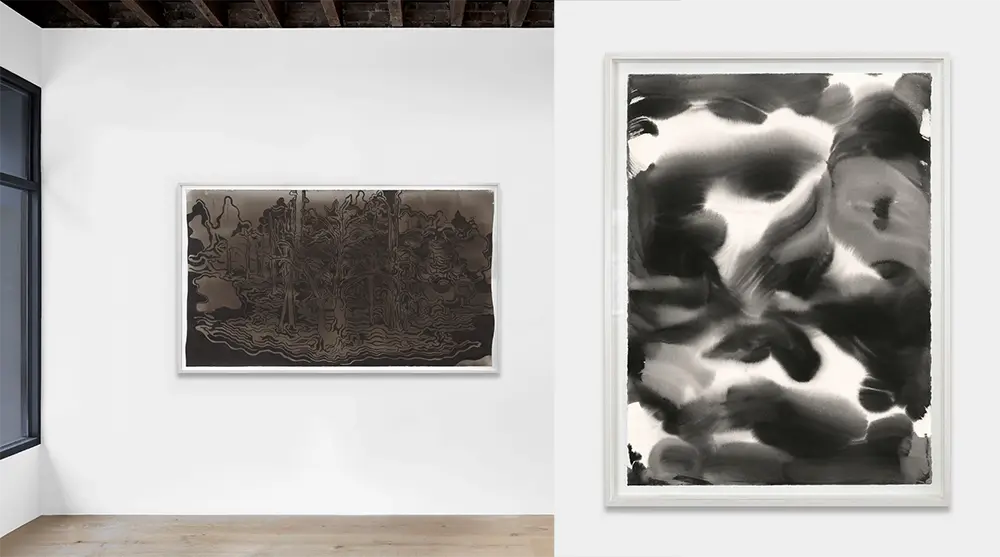
Eric Wolf (b 1960) paints between Chatham, New York, and Rangeley, Maine. I grew up going to Rangeley lakes region every summer, its raw, northern, moose country, hundreds of lakes dotted with islands.

Opening Reception → 20 Feb 2026, 6pm–8pm
ABRI MARS | 53a Stanton Street New York
FERRARI EV
Ferrari’s first all-electric car has a name, Luce, Italian for “light.”
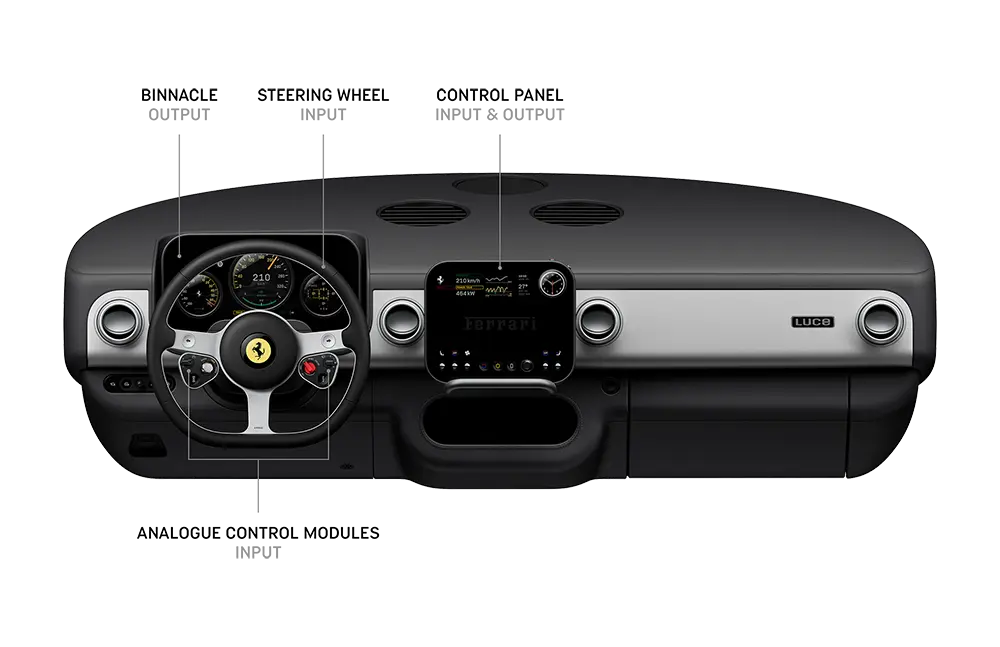
The most significant design collaboration in the automotive industry in years. Jony Ive and Marc Newson’s LoveFrom spent five years on the car’s design, what they’ve produced is predictably polarizing. It is cool to see some of Ive’s first product impacts post apple coming to market.
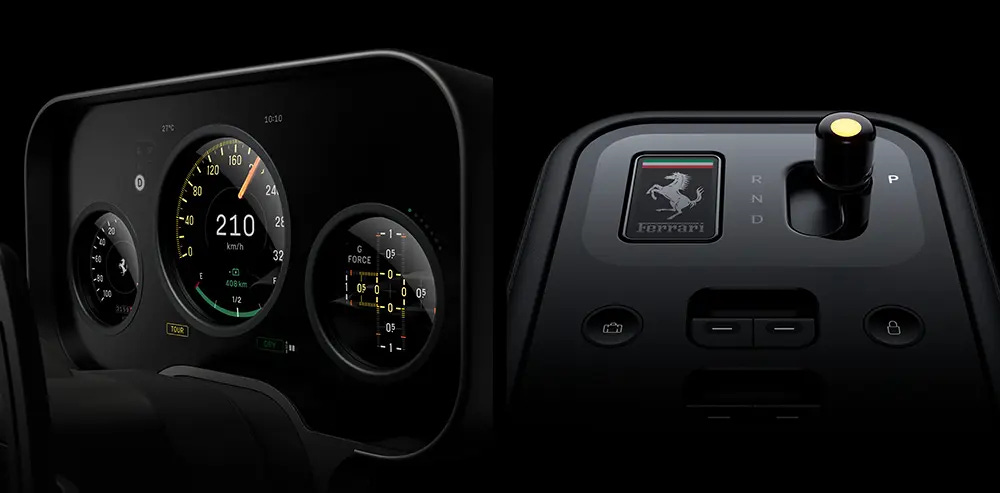
What works: the commitment to tactile controls. The past several years of EV interior design have pushed us toward fully digital interfaces, giant touchscreens that killed muscle memory and buried something as basic as volume. A CNC-machined aluminum steering wheel with mechanical dials, physical toggles for climate, over 40 pieces of Glass instead of the industry’s plastic-heavy material palette.
“If the power source is electric, why does it follow that the interface be digital?”
As Ive told Bloomberg:
There is the e-ink key gimmick, slide it into a magnetized dock and its yellow glow visually “drains” into the shifter. An evolution of push-to-start.
Where it gets complicated: the internet hasn’t physically sat in this car, and the photos alone have ignited a real debate. Ferrari cabins used to feel slightly unhinged. This one feels like it was designed in Cupertino, which, functionally, it was. People in the design community are calling it “soulless” and “utterly inappropriate for a Ferrari.”
My main beef is Ive just keeps copping Dieter Rams, he can’t move off the Braun interface!
Evo’s review made an interesting counterpoint: designs that provoke immediate backlash often age better than ones that are unanimously accepted.
At €500,000+, the Luce isn’t competing with Model S or Taycan. It’s competing with the idea that an electric Ferrari can still feel like a Ferrari.
SERVICES GÉNÉRAUX | “SISYPHE”
This roll out is really fresh. A hardbound book, a short film.
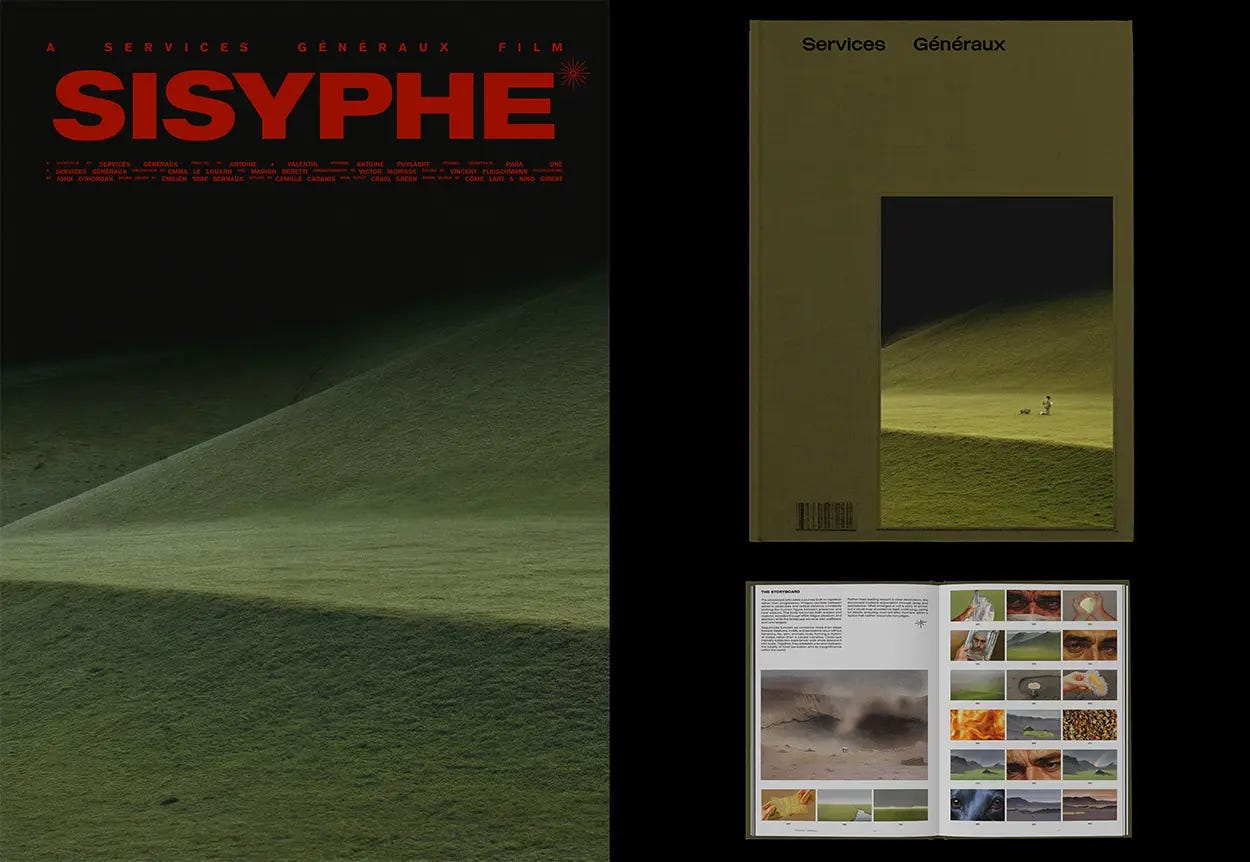
The book tells the story as SG put it:
Sisyphus (SG) bringing the boulder (the film) up the hill (existence).
I admire any agency’s truly artistic output like this, first hand I know how hard it is to prioritize non commercial work against revenue driving clients. Things like this are self funded, and HARD to fit in.
FEB 17th | 7pm
PUBLIC RECORDS
233 Butler Street
Brooklyn NYC
OLYMPIC AESTHETIC
This year’s aesthetic output around the games is hitting a high mark.
Lots of talk about drones, revolutionizing high speed coverage, bringing us closer to action than ever before. I’m also looking at some of the photographers putting out the most artistic, stylized, editorial content.
Stand outs:
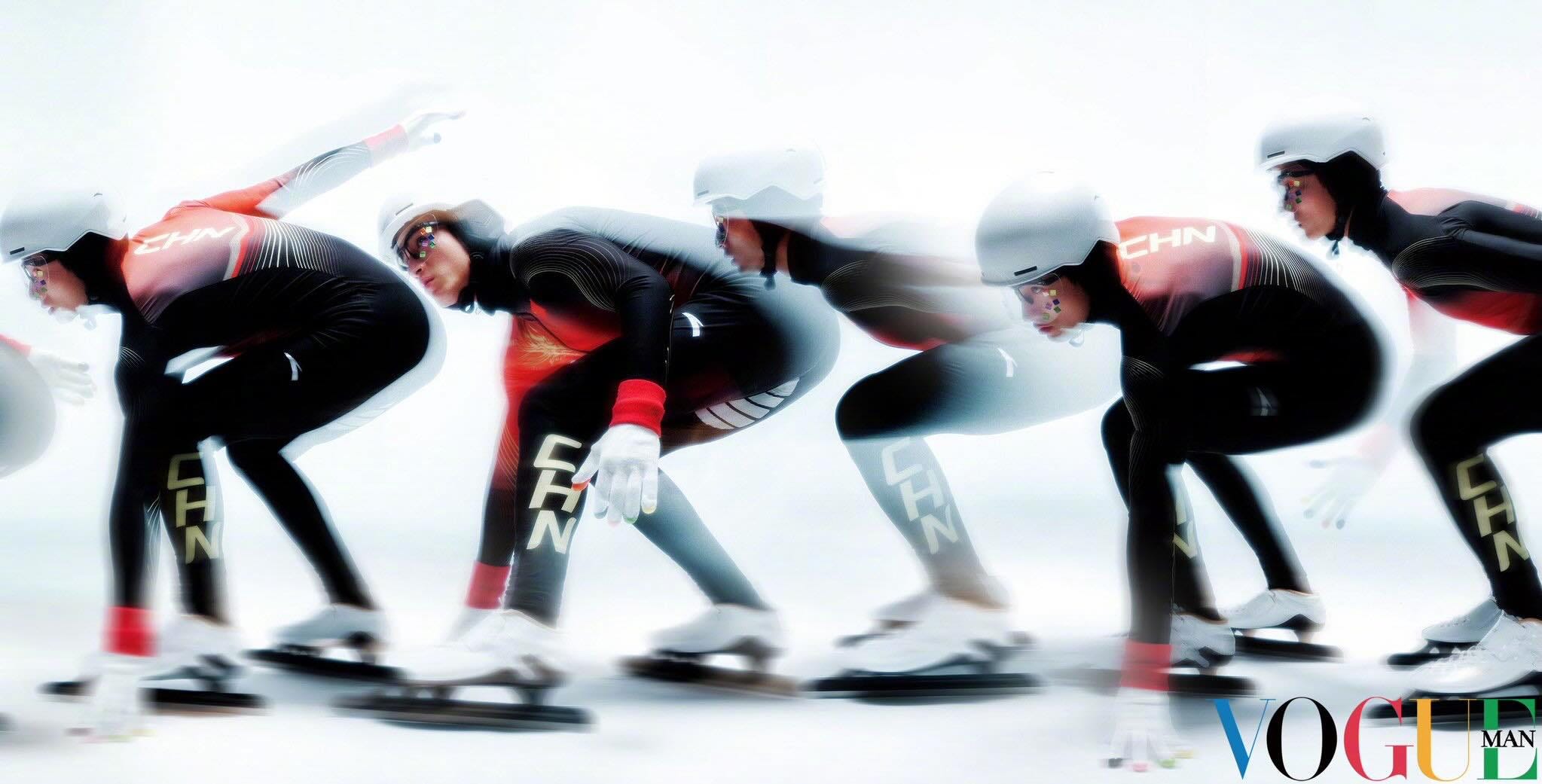

Win Tam’s editorial of team China’s uniforms for Vogue China

Florence Pernet’s coverage feels like art.

Isami Kiyooka, at 21, is one of the youngest photographers to officially cover the Olympics. I worked with him in Aspen for Moncler, he was leaving for Cortina the next day. His images are cinematic, seeing him in action he’s capturing at speed, from distance, is hard and impressive. The way he’s editing, finding these incredibly artful compositions then his grades elevate to a whole new level.
This is not to say the Olympics has not seen cinematic mastery in the past.
For a masterclass, look to Kon Ichikawa’s Tokyo Olympiad 1965 (Criterion collection).
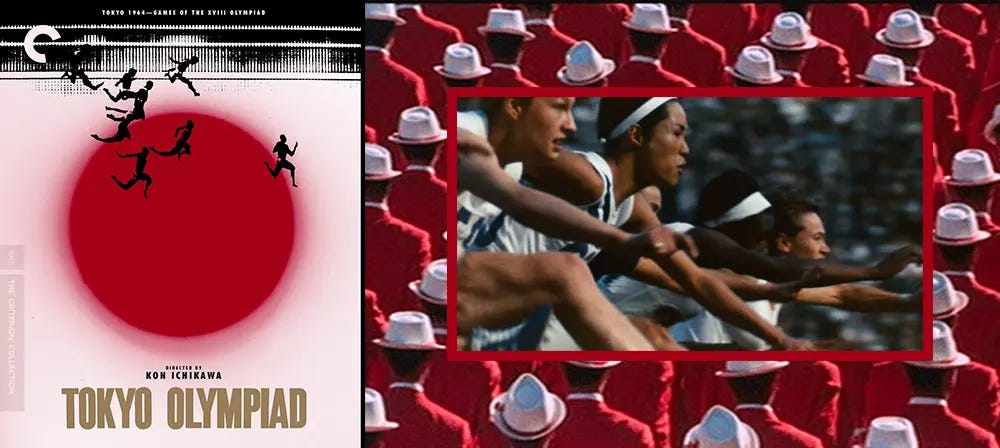
Perhaps one of the greatest sports films ever made. I was exposed to this the first time I met Kanye, he had it looping on a massive wall in his barn in Cody, with Led Zeppelin playing over it.
PREDICTION MARKETS 10x’d VEGAS
$1.34 billion in a single day. That’s what prediction markets processed on Super Bowl Sunday. Kalshi at $871 million, Polymarket at $312 million across 7.5 million transactions. To put that in perspective, the entire prediction market industry did $2 billion for the full month of August 2025.
The topic now shifts to insider trading, it is the wild west and the line between sharp trading and outright cheating is getting blurry fast. These markets move too fast for typical regulation.
A day-old anonymous Polymarket account correctly predicted 17 out of 20 bets for $17k profit on Bad Bunny’s halftime show, including that Lady Gaga, Cardi B, and Ricky Martin would perform, and that Drake, Travis Scott, and Post Malone would not. This led to a WSJ piece on insider trading concerns. Polymarket didn’t respond to comment.
“Outsider trading” This year, a TikToker named Cadeon Booth flew to San Francisco, camped outside Levi’s Stadium with a listening device and a stopwatch, timed Charlie Puth’s national anthem rehearsal at 1:44, and bet the under on Polymarket. He won. His defense: he wasn’t part of the production and stood where any civilian could have.
“A Super Bowl halftime show insider has been confirmed, and he still lost money.” Rapper Preme, a longtime Drake associate, created a Polymarket account the day before the Super Bowl and bet $185,000 that neither Cardi B nor Drake would perform. He won the Drake bet (pocketing ~$200). But Cardi B showed up on the halftime stage and danced without singing and Polymarket ruled dancing counts as performing. Preme lost $178K on a technicality. He posted an angry complaint on X, then deleted it.
Then there’s the real thing. Israeli authorities indicted an IDF reservist and a civilian for using classified military intelligence to place bets on Polymarket, specifically around the timing of Israeli strikes on Iran during last June’s twelve-day war. One account, operating under the handle ricosuave666, made seven eerily accurate predictions and walked away with over $150,000. The IDF called it a “severe ethical failure.” That’s putting it mildly when you’re monetizing airstrike intelligence on a crypto betting platform.
And this isn’t isolated. In January, an anonymous Polymarket account turned $32,000 into over $400,000 betting on the capture of Nicolás Maduro, hours before the U.S. raid became public. The account was a week old. Its only activity was Venezuela-related.
The CFTC? Still figuring out its jurisdiction.
BILL GURLY ON TETRA
Rick Rubin’s Tetragrammaton continues to be one of the best long-form interview pods out there, and this week’s episode with Bill Gurley is essential listening for anyone thinking about career, venture, or chasing the thing you actually want to do with your life.
Gurley is a legendary general partner at Benchmark (backed Uber, Zillow, Grubhub, OpenTable). Writes one of the best blogs in tech, Above the Crowd. His 2023 All-In Summit talk, 2,851 Miles, is a 25-minute breakdown of how regulatory capture kills innovation across healthcare, telecom, and housing. It got a standing ovation.
What makes this Rubin conversation stand out is how much of it isn’t about venture at all. Rubin asks innocent questions that keep things relevant to a wider audience.
Gurley came from Wall Street, a sell-side analyst trained in the conservatism of Buffett and Howard Marks. He’s more uncomfortable in bubbles than dark days. Dark days, the job is easy. Bubbles, the way you win is by being more careless, which reinforces the whole thing.
Worth sitting with right now.
Missing Google, Spotting Twitter
Gurley brought Larry Page and Sergey Brin into Benchmark when Google was 25 employees. They passed. The search market had collapsed, Yahoo had fallen from 80 to 10, both founders insisted on being CEO. Every mental model he’d built pointed the other way. He’s called it the biggest miss of his career. He was the one who found them, brought them in, and still couldn’t see past his own pattern recognition.
Twitter was the opposite. The viral growth was there and everyone just knew. He doesn’t think they even formally voted. Pattern recognition working in the right way.
Benchmark operates unlike any other major firm: equal partnership, everyone makes the same money, majority vote wins. Healthy peer pressure, if you’re not running full bore, maybe you should opt out. Which is ultimately why Gurley stepped back.
The AI Bubble
Gurley is blunt: there is almost certainly an AI bubble, and it’s like nothing he’s ever seen. When Amazon was losing a billion a year, that was crazy. OpenAI’s burn rate is five times that. Everyone is reading the same shit, investing ahead of the curve, and every interesting AI category might require willingness to lose a billion a year just to compete.
“No one’s fearful, everyone’s greedy, and it will eventually end.”
Our current fear of AI is tied to a constant fear of innovation going back to the looms. It’s just happening faster than ever before, and for the first time affecting white-collar jobs, not those in the fields, it’s affecting the people writing the articles.
What he looks for
Gurley once asked Bezos why he was such a good angel investor. Bezos said he only looks for one thing: Is this person going to do this no matter what? Whether anyone gives them money or not. Unbridled determinism.
He says you learn to bet on the person more than the idea. There's a small percentage of the population capable of bending the earth to their will. Even on the wrong idea, they can pivot. The skill set is speed, vision, and salesmanship. He pointed to Adam Neumann's original WeWork pitch. After one meeting, Gurley was nearly certain he wanted to do the deal, in an industry Benchmark had never touched, almost entirely because of how effective Neumann was as a salesman.
A core thread of Gurley's new book, Runnin' Down a Dream: the desire to study a field to an exhaustive level. He was reading biographies of Bobby Knight, Bob Dylan, and Danny Meyer, and realized they all had a remarkably similar strategy despite being in completely different fields. They went after dreams, dreams most people tell you not to pursue.
He gave it as a speech at UT Austin. James Clear found it and tweeted everyone should watch it. Then Brian Koppelman told him point blank: you have to make this a book.
“I hadn’t even gotten through the first chapter, and I was already writing down ideas.”
— Jeff Bezos
Seinfeld's concept of fascination over passion anchors a key idea. The desire to learn about a field exhaustively, and for that to feel rewarding. If studying the greats in your field sounds boring, you're probably in the wrong one.
He recommends finding four or five peers (maybe competitors, maybe not) and meeting quarterly. Share without concern. Encourage your direct reports to do the same within their peer group.
One more: stay interested in ideas that challenge your worldview. It’s good for society, and it’s good for avoiding your own blind spots.
Research for the book found six in ten adults would choose a different career if they could start over. Gurley’s hope is to disinhibit as many people as possible.
This is a rare VC conversation without the self-mythology.
What’s below the paywall:
The jobs report that isn’t what it seems. 2.1 million positions revised away and why healthcare is masking a white-collar collapse, California’s billionaire exodus as Zuckerberg joins Page, Brin, and Thiel on the way out, Matt Shumer’s 80-million-view essay on why we’re in AI’s “this seems overblown” phase, Anthropic’s $380 billion valuation against a Pentagon contract crisis and the Clawdbot fumble that handed OpenAI a gift, retatrutide as Huberman’s “trillion-dollar drug” and Bryan Johnson selling immortality for $1 million a year while Peter Attia’s name surfaces 1,700 times in the Epstein files, and SpaceX pivoting to the Moon. Plus Bill Gurley’s reading list.
As I mentioned previously, if you’d like a free subscription, feel free to reach out on why, I’ll most likely be happy to oblige.
