

First Contact
UFO DISCLOSURE. JAFA x PRINCE AT VENICE. GAMESTOP FOR EBAY. MILLENNIAL DADS. CONDUCTOR BROOKLYN. A24 BOURDAIN. CHANEL #1. VOICE STACK.

** Sincere apologies to everyone who received two posts today. There was a glitch on the title testing which resulting in 3/4 of people not receiving this weeks letter.
“If aliens visit us, the outcome would be much as when Columbus landed in America, which didn’t turn out well for the Native Americans.”
Stephen Hawking
Friday gave us the first disclosure drop — the Pentagon releasing classified materials on “unidentified anomalous phenomena.” I’m excited, Tom DeLonge is excited, pastors nationwide were warned to prepare for imminent UFO disclosure. Amazing coincidence that Spielberg’s Disclosure Day drops next month.
Seriously though, I’m a huge space nerd who’s been reading about Project Blue Book for a decade and leans to the mathematical probability that we are not alone. Like the Epstein files, there are a lot of documents and redactions to sift through, but the beauty of an AI-empowered internet hive mind is people will start making all sorts of connections.
The first round was somewhat underwhelming, mostly witness accounts rather than bona fide technology, but we did get Apollo 11 & 17 transcripts, classified for nearly 60 years (Buzz Aldrin, Neil Armstrong, and Michael Collins all independently described the same object). Buzz killers will blame cosmic ray interactions, but having those transcripts out is a welcome change of tone.
This is supposed to be a ‘drop in the bucket’, with more substantial material released over the coming weeks, just in time for independence day :)
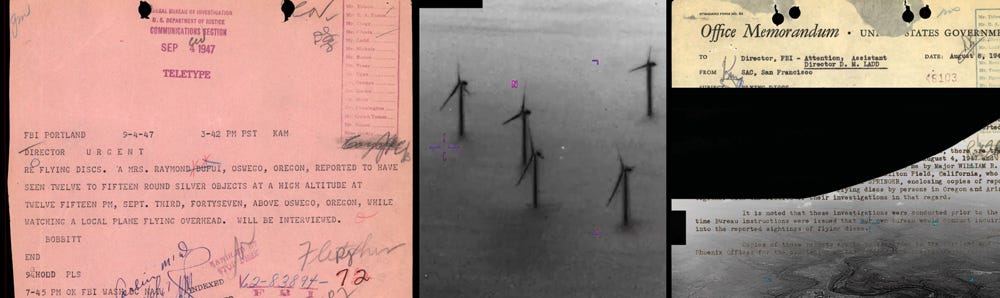
What we absolutely got, for the designers out there, a treasure trove of texture files and assets for some badass merch and collages.
THIS WEEK:
Jafa and Prince share a stage at Venice Biennale for the first time. A new fair opens in Gowanus for the Global Majority, with 800 people through the door in the first hour, at a fraction of what every other fair charges. A24 goes to Provincetown, 1975, the summer Bourdain became a cook. Chanel leads the Lyst index, Gucci climbs four spots while Kering reports a 14% sales decline, and Coach is quietly about to flip Kering on market cap. Millennial dads have done four times the childcare their grandfathers did.
Ryan Cohen made a $56 billion bid for eBay, went on CNBC and said nothing, then listed his socks to help fund it. Gen Z was never that sober, and TikTok just opened for alcohol brands.
Two books:
One on America’s most clandestine aerospace program, one on how Pixar built a business where honest feedback could actually happen.
HELTER SKELTER: ARTHUR JAFA AND RICHARD PRINCE
“I never liked my work… Because I did it.
Obviously, if you don’t like your work, a logical alternative is to take someone else’s – and call it yours.”
— Richard Prince
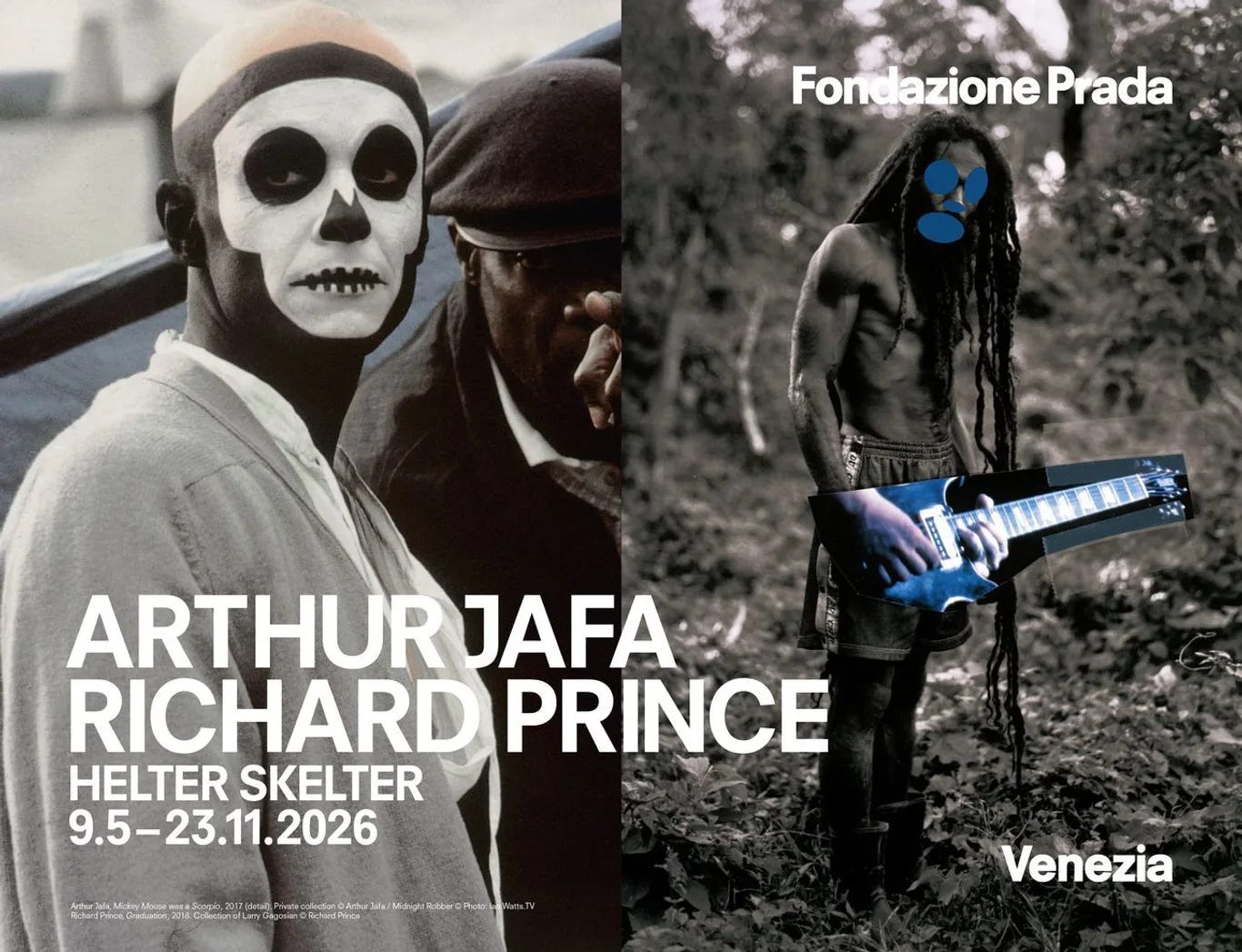
Two of my favorite artists, both known for “lawless” appropriation, are collaborating for the first time with “Helter Skelter,” opening now at Ca’ Corner della Regina and running through November 23, curated by Nancy Spector during the Venice Biennale. More than fifty works across film, photography, painting, and a new collaboratively conceived zine built from images the two artists swapped during the making of the show.
The show title, especially now, is provocative, referencing Charles Manson’s most notorious misreading of pop culture in the late 60s.
“The term ‘Helter Skelter,’ reinvoked here as the title of this exhibition, contains all the complexity and messiness of its misuse in popular culture.
It is an unruly readymade, selected by the artists to disrupt expectations, a perfect expression of the composite nature of this two-person show.”
— Fondazione Prada, official statement
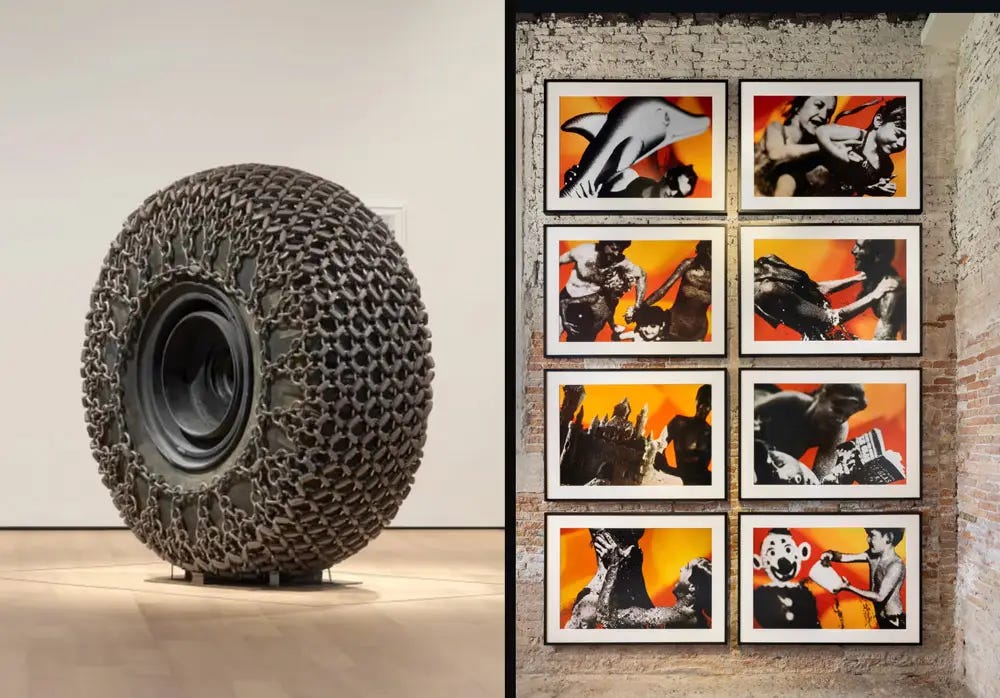
Both Jafa and Prince are masters of cited and remixed material, a form riding alongside a current debate in the age of AI and generative image-making that has brought image-theft to the forefront. As Fondazione Prada frames them, they “share an ethos of lawlessness when it comes to the appropriation and manipulation of images,” source material pulled from movies, pulp novels, comic books, YouTube videos, sci-fi stories, album covers, record sleeves, rock ‘n’ roll posters, news reels, celebrity memorabilia, and social-media posts. That last category is where Prince ran into trouble.
Beyond fine art, Jafa has collaborated on music videos for Kanye West, Jay-Z, and Solange, most notably directing Wash Us in the Blood (2020). His 2016 Love is the Message, The Message is Death is essentially a music video, synced to Kanye’s “Ultralight Beam” and held in MoMA, MOCA, and major collections worldwide.
This Lawlessness has had two very different resolutions. In January 2024, Prince was ordered to pay $900K in the New Portraits Instagram screenshots case: $200,000 to Donald Graham, $450,000 to Eric McNatt, $250,000 in costs, plus a permanent injunction barring future reproduction. In parallel, Jafa won the Golden Lion in 2019 for a film made almost entirely of appropriated material, and has never been sued. Jenny Wu, writing on the show in ArtReview, gets at what the curatorial framing avoids saying out loud: “More than permission, power licenses the act of appropriation.”
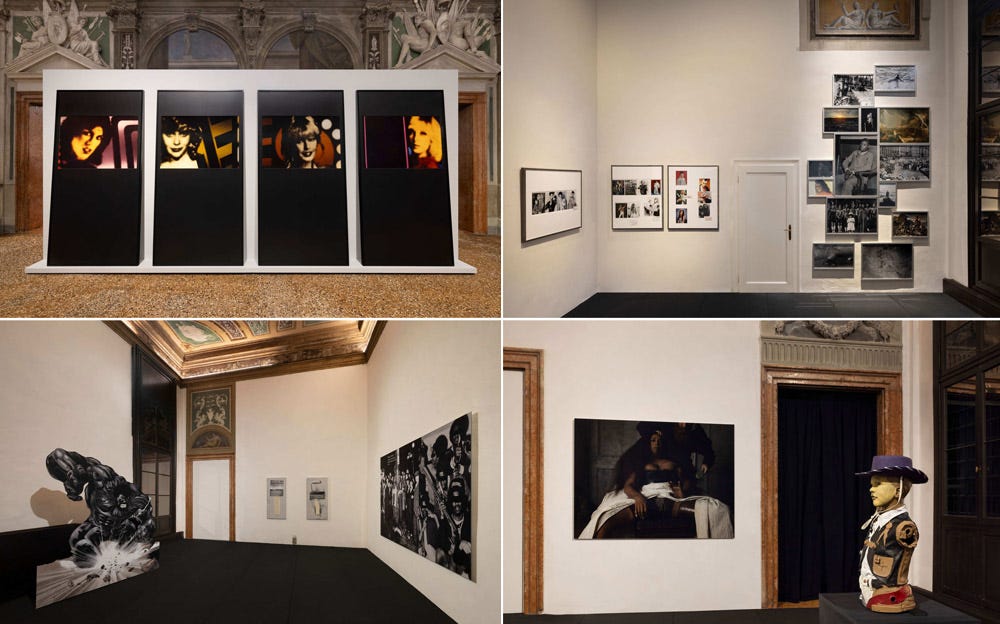
Putting both artists in the same room falls to Fondazione Prada, which is now among the most significant privately funded contemporary art programs operating. Founded in 1993 by Miuccia Prada and Patrizio Bertelli, with its Milan venue designed by Rem Koolhaas and OMA in 2015, the foundation has run Ca’ Corner della Regina as its Venetian stage since 2011. Spector, former artistic director of the Guggenheim, has a track record of staging the show no other institution will touch: her curatorial note cites Jafa and Prince as “quintessentially American.”
The zine the most accessible artifact, Prince and Jafa built it from images they exchanged during the making of the show, a back-and-forth of source material that is legally and philosophically distinct from what each does alone.
A (FRIEZE) PARTY & OPEN STUDIO NEXT FRIDAY
Into art week, we’ll be bringing back our ‘A PARTY’ series, with a night at BoomBoom with Moodyman & WHITEWALL to celebrate Frieze. Click here to RSVP for this one.
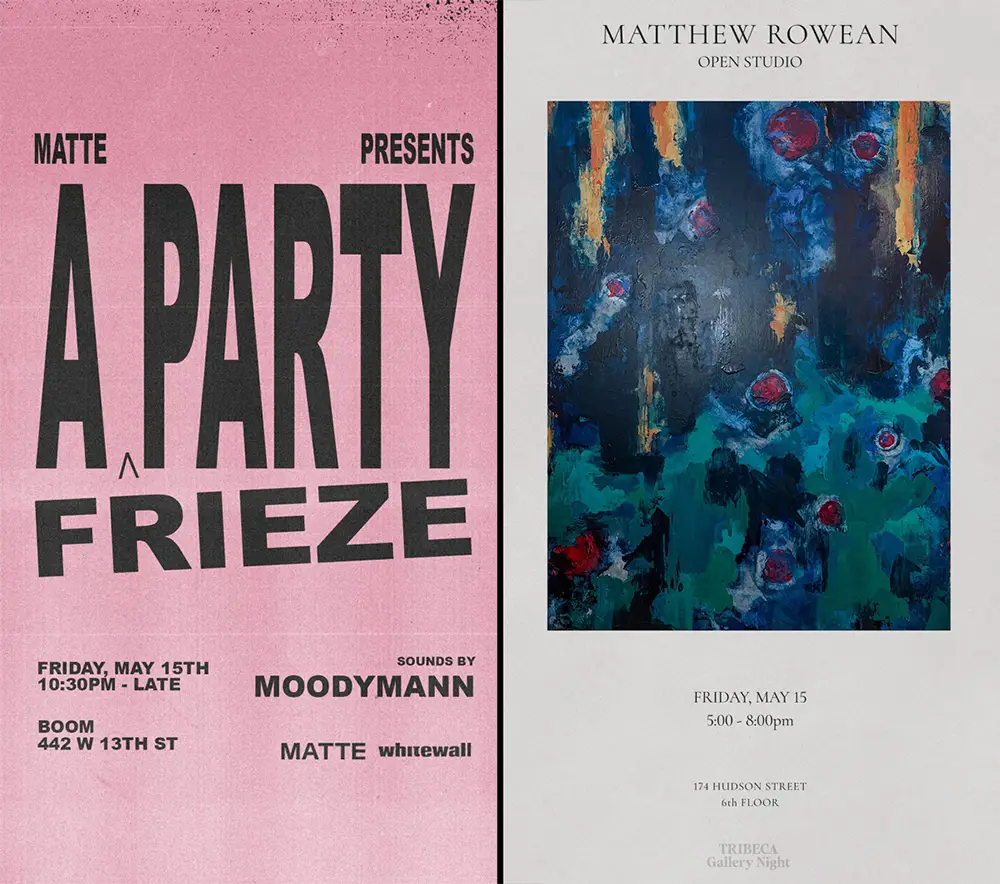
Earlier the same evening I’m going to have my first open studio, adjacent to 'TRIBECA GALERY NIGHT.’
Email me if you’d like to come see what I’ve been working on for 4 years.
DADS SHOWING UP
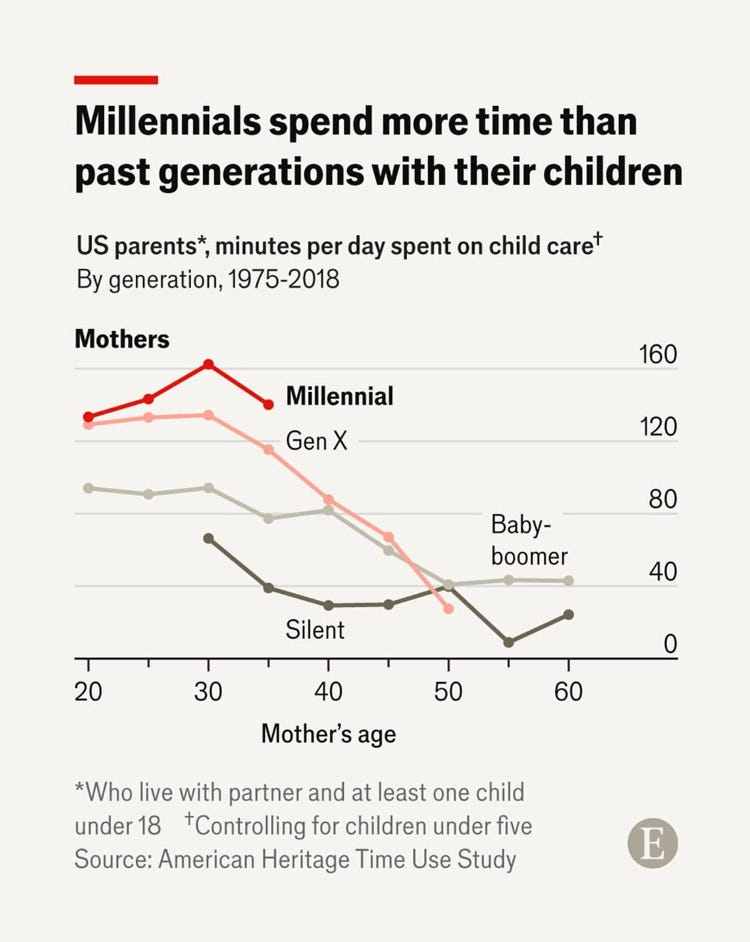
Derek Thompson’s recent piece on fatherhood and time sent me down a rabbit hole this week. Millennial dads do roughly four times the childcare their grandfathers did. Fathers in their 30s now spend 80+ minutes a day on direct childcare, more than double the 1965 baseline of 30 minutes a day for married fathers and nearly four times what Silent Generation dads put in. Being really in this, as a father of two, I can’t fathom 30 minutes a day.
The shift accelerated during the pandemic and stuck. Jessica Grose’s NYT Opinion piece, drawing on Misty Heggeness’s Care Board dashboard, brings the data: millennial dads ages 25-44 added 2.5 hours per week of childcare comparing pre-Covid to 2021-2023. Stay-at-home dads have nearly doubled, from 11% of all stay-at-home parents in 1989 to 18% in 2021, per Pew Research. And 23% of those SAHDs now cite home and family care as the reason, not unemployment, compared to 4% three decades ago.
Fatherhood is hands down the single most transformative change in my life. It has reframed how I use every ounce of free time. I fight to get home by 6, and I’m aware that’s a privilege of owning my business, because it’s genuinely difficult to pull off. I’ve changed how I approach business travel: before kids I was happy to be on the road, treating every trip as an opportunity to extend and explore. Now if it’s not a critical meeting or job, I’m either not going or flying home that night.
Time with my kids, especially on weekends, consumes the rarest resource. I’m constantly trading studio time or writing time for the park or the museum. A conscious decision, as I’m acutely aware of how little time I have with them being young and wanting to be with me.
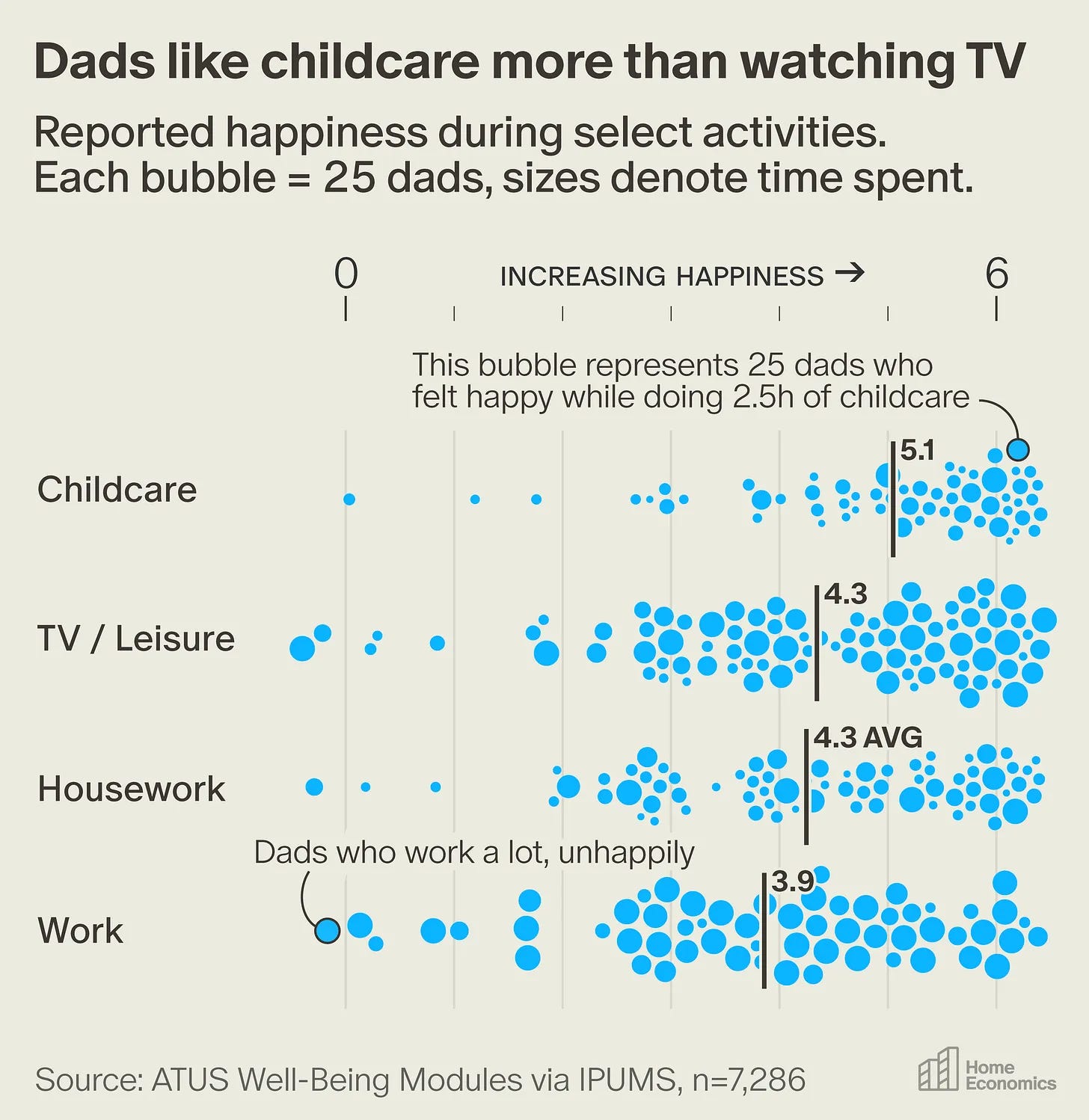
Thompson’s reframe: what previous generations treated as a chore is now a leisure activity. “According to the American Time Use Survey well-being questionnaire, fathers say that little brings them more joy than being with their kids, other than hanging out with friends.”
The ability to give your kids that time is, increasingly, a luxury good. The trend is concentrated among college-educated men. Among the least-educated fathers, time spent with children is actually falling.
“To make time for kids, modern fathers have reduced their daily office work by more than an hour—not to mention, cut down their TV time by 30 minutes—as they pour more of their waking life into being at home.”
Derek Thompson
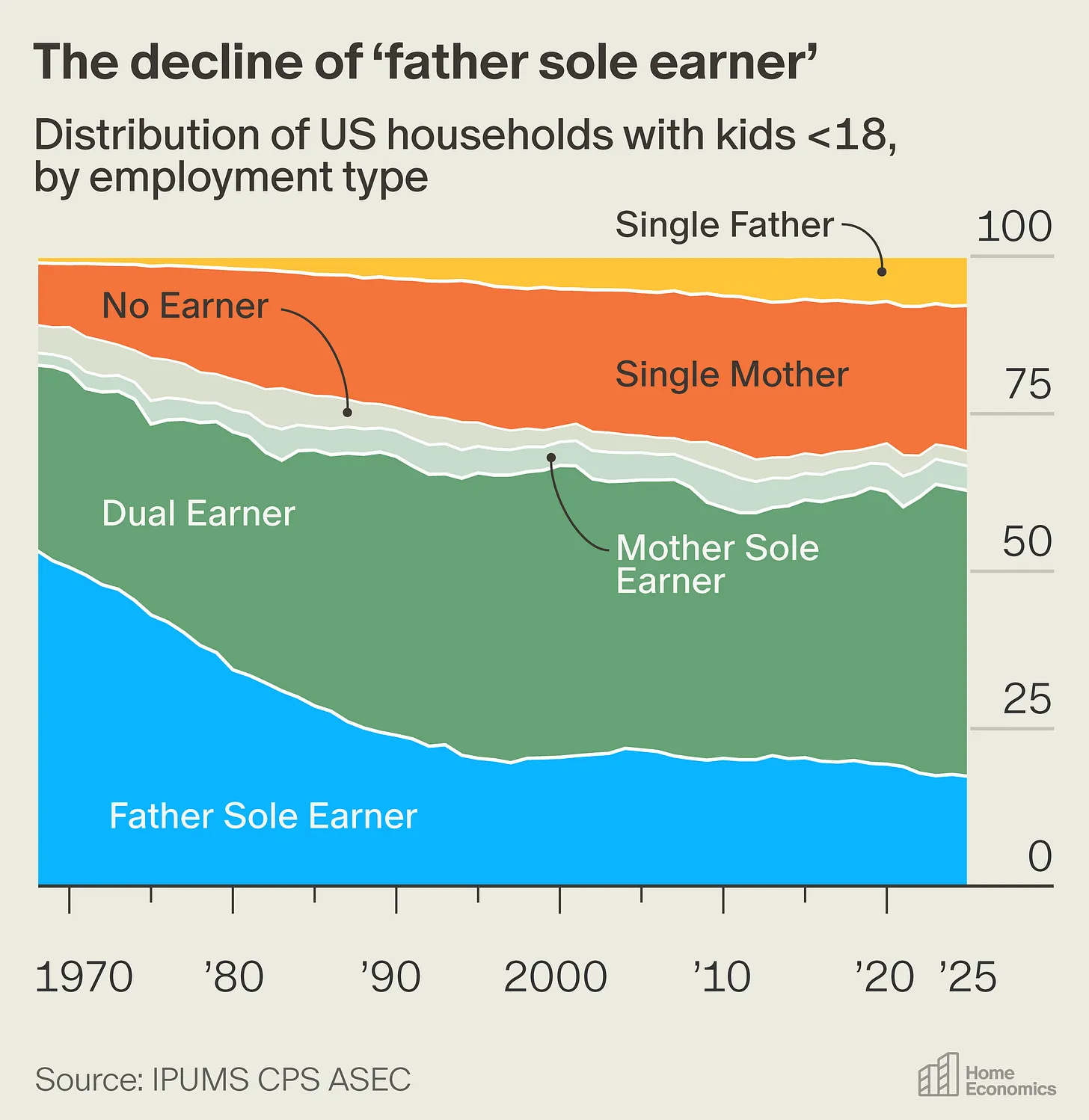
Those hours come with a workplace cost. The Resume Genius Workplace Realities Report 2026, covered in Forbes, finds present fathers hiding caregiving at the office and reporting concrete career penalties for openly performing it: promotions delayed, or being perceived as “less committed.”
“Even with supportive leadership, there’s still pressure for fathers to appear constantly available and unaffected by caregiving,”
Nisar Ahmed, a New York father of two.
An honest note, it’s important to set this straight that women still own the lion’s share of raising children. I’m aware of the tonality of this segment landing on mothers day, that the bar was really low if we’re making generational comparisons.
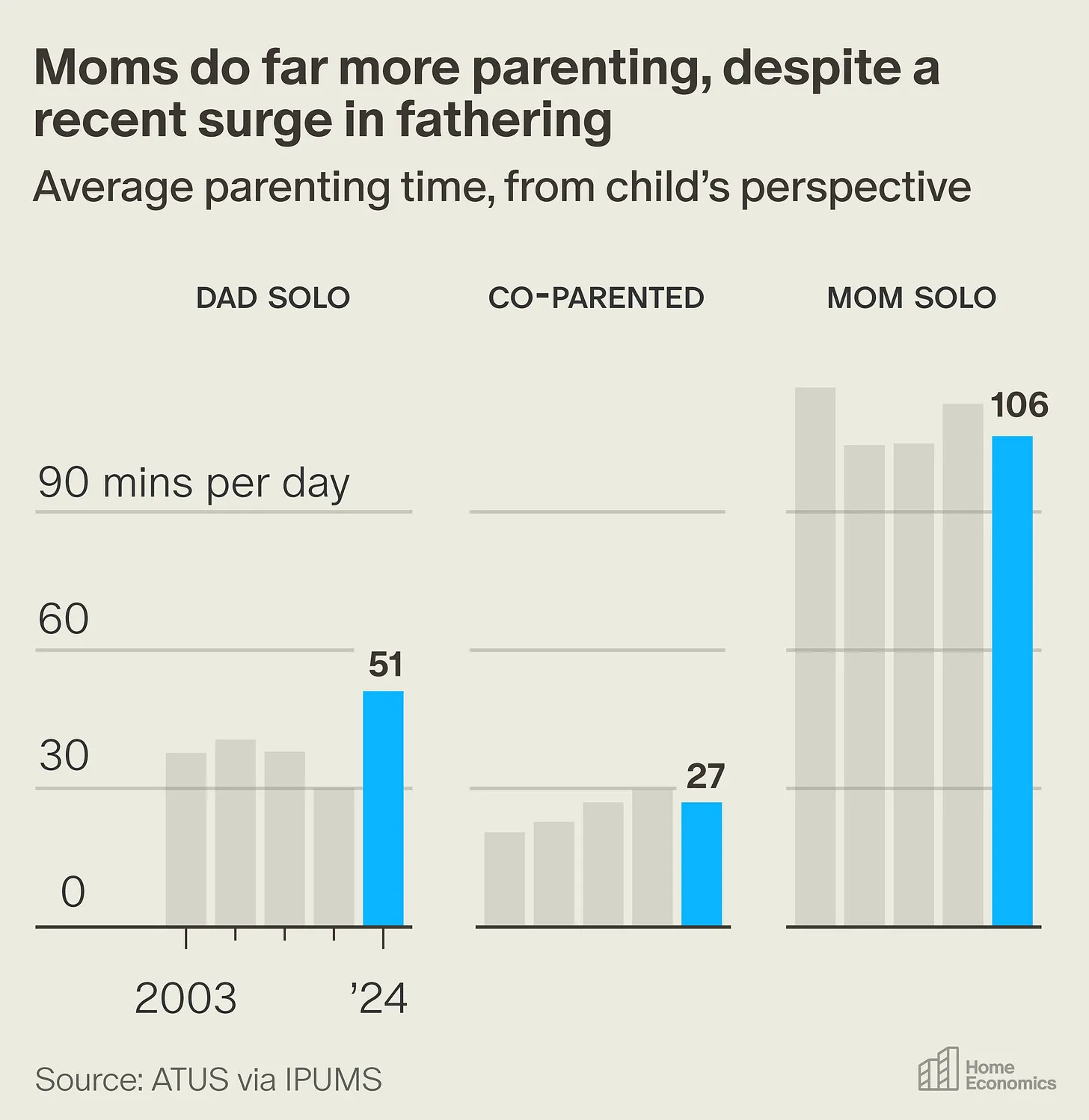
Mothers still do roughly twice the solo childcare and carry 71% of household mental load. There is also data showing dads take a larger proportion of the ‘less stressful’ aspects of parenting. So yes, our generation of fathers is stepping up, but we still have a ways to go mathematically to get to equal weight, but we’re moving in the right direction.
CONDUCTOR OPENS STRONG
Billed as the first New York fair “for the Global Majority”, Conductor opened at Powerhouse Arts in Gowanus to great attendance. 800+ guests through the doors in the first hours of the VIP preview, as ARTnews put it, a “crowd size expected from a biennial preview, rather than a typical fair opening.”
Adriana Farietta (formerly deputy director of the Armory Show) directed the fair in collaboration with Powerhouse Arts President Eric Shiner, who anchored the curatorial pitch on artists and galleries from Africa, Latin America, the Caribbean, South and Southeast Asia, the Middle East, Oceania, and Indigenous nations. Timing was strategic. Farietta scheduled Conductor before New York Art Week so participants wouldn’t “compete with a small pool of collectors who are on the traditional ‘fair circuit.’” The week after Conductor closed, Frieze opened on Randalls Island.
The pricing model is refreshing, something that has become a real issue as booths at the major fairs start at $42,000 and run well past $100,000. You could get booths for $2,500 nonprofit / $3,500 artist-run collective / up to $12,500 for the largest booth. All extremely reasonable.
I also like the encouragement of self-representing artists, who could participate at no cost with a contingency: 30% of any sales went to Powerhouse Arts.
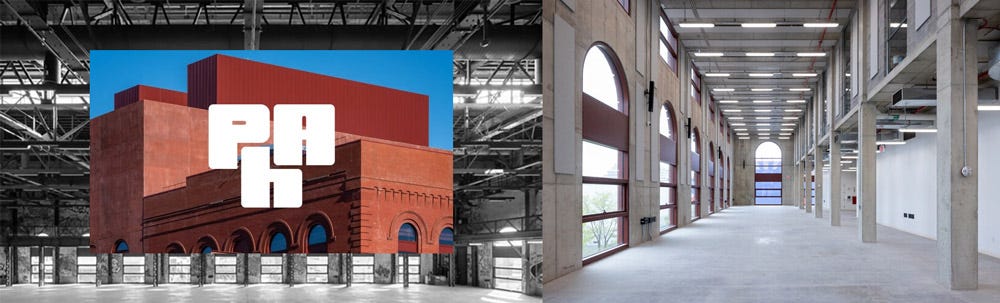
Powerhouse Arts is a beautiful facility, 170,000sq ft of fabrication-and-arts running as a nonprofit, inside the restored Brooklyn Rapid Transit Power Station, a 1904 building designed by Thomas Edward Murray. It sat derelict for decades, known as “the Batcave,” before Herzog & de Meuron and PBDW Architects reopened it in 2023. Less than three weeks before Conductor, the Brooklyn Fine Art Print Fair drew record crowds in the same space.
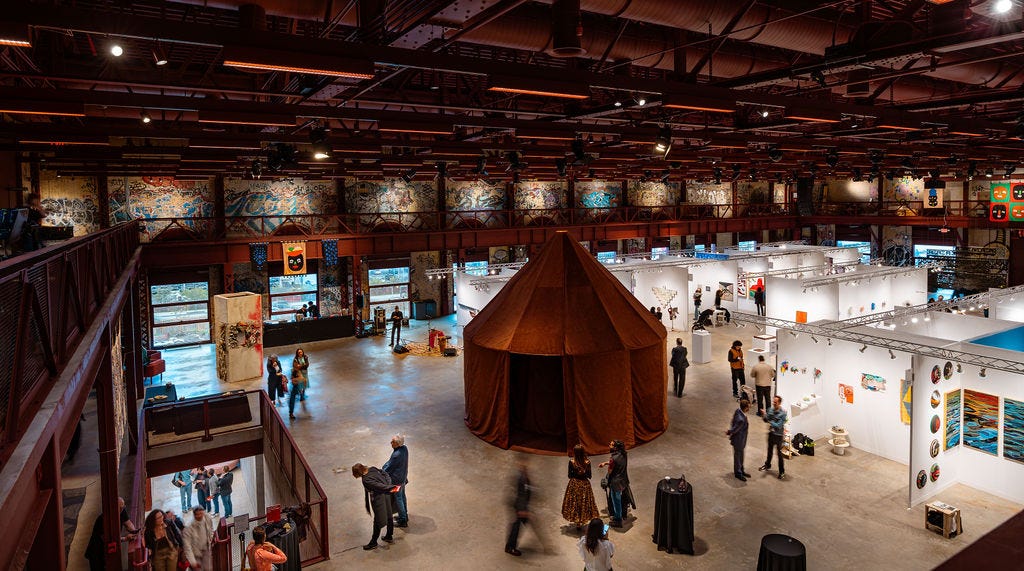
Standout work: House of Silence by Turkish artist Vuslat and Tunisia-born architect Sana Frini, a chocolate-brown yurt absorbed in felt designed to absorb sound. You entered through a dark corridor and emerged into a circular meditation room lit by a single opening at the top.
Across the special projects, Grammy-nominated Lido Pimienta played a four-song a cappella set; her tapestry installation funded a school and residency with the Wayuu Indigenous community in La Guajira, Colombia.
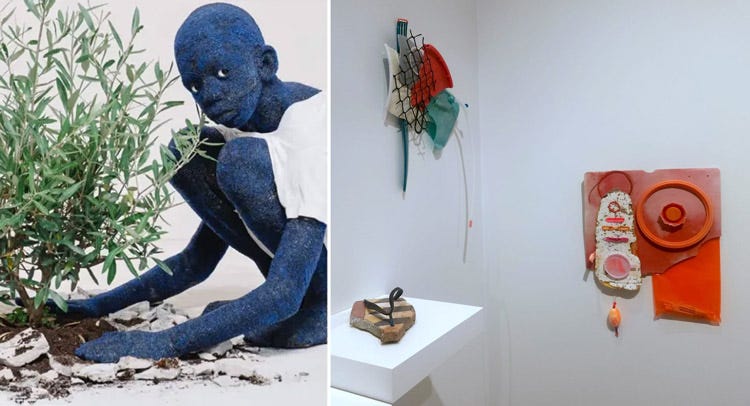
Margarita Vincenty showed plastic-driftwood assemblages built from Puerto Rican beach garbage. “I used to pick up more driftwood at first, but now I work more with plastic because I can play with the duality of it,” she told Hyperallergic, “with the happiness of it and the ugly part that no one wants to admit, that these plastics are probably here forever.”
It’s great to see a reasonably priced fair showcasing a wide aperture of artists succeed this strongly out of the gate.
LOBSTER CLUB SPRING GROUP SHOW NYC
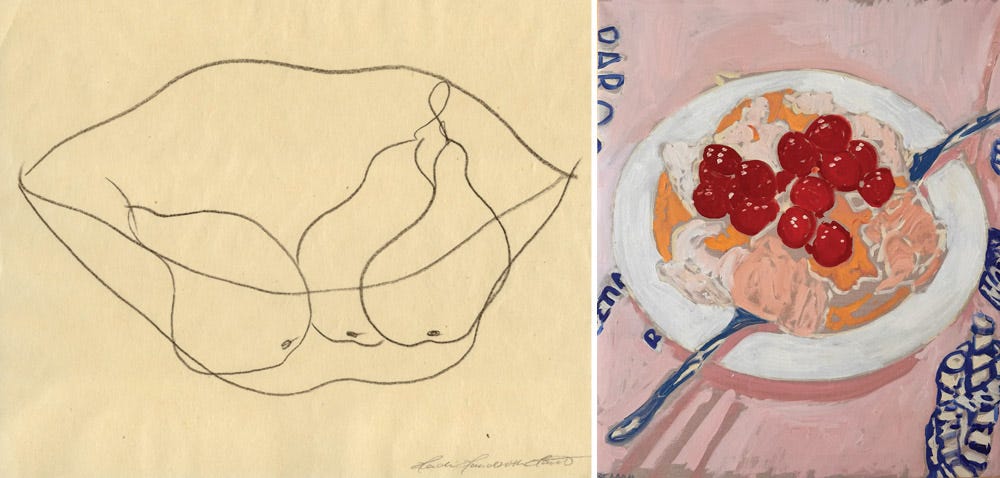
Lobster club’s caught my eye for the past few years for the way they are bringing their group and solo shows. The event’s have these really interesting culinary as art component, its created a communal experience and a real point of difference for an ‘opening’
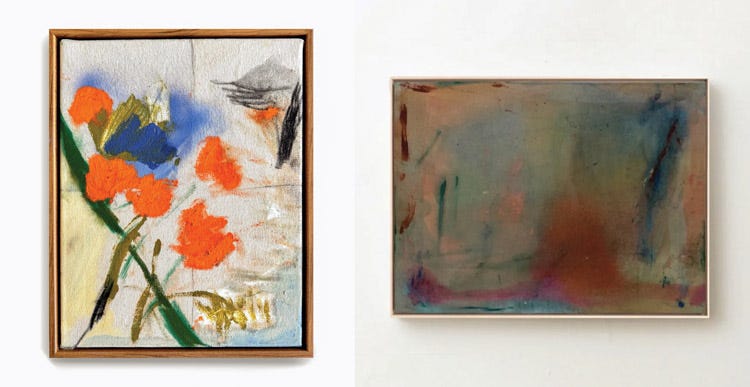
The curation is great, if your looking for rising talent, they have built a really cool roster across their residencies and shows.
This May’s return to NYC brings together: ariana goitia, boramie sao, danielle kosann, holly osborne, jay miriam, john reagan, kristen diederich, kristen giorgi, maja dlugolecki, megan koons, and thai mainhard.
TONY
What a way to land on Tony Bourdain. The late part of his life is so deeply covered, we have the docs, we got to witness the Parts Unknown era in real time as he set the stage for what a global travel show could look like. Kitchen Confidential is the closest thing we have to the early stage of his life. The film puts that gap on screen.
It’s in good hands. A24 distributing, Matt Johnson directing after BlackBerry. Johnson is a small-rooms-and-real-faces director rather than a myth-maker, which is the right disposition.
“I’m actually not a fucking cook. I’m a writer. But I said I know how to cook.”
Anthony Bourdain
It is NOT a cradle-to-grave story. The Bourdain estate said so on the same day as the trailer drop: “one transformative summer in 1975 in Provincetown, Massachusetts.” This is rich, the line-cook crucible that became the spine of Kitchen Confidential’s opening chapters. The summer Bourdain himself is credited as the moment he became a chef.
Dominic Sessa‘s casting feels correct, big shoes to fill as he’s in EVERY shot. Johnson, in EW: “[Sessa and Bourdain are] both from Jersey, both sent to private school, but didn’t fit in, both restless and searching. He is in every shot of the movie, and carries the entire story on his hunched shoulders.”
LYST INDEX Q1 ‘26
Lyst’s quarterly index, pulling from 160 million annual shoppers, is a good snapshot of which brands are succeeding and driving conversation culturally. Essentially brand heat. This quarter, 20% of the Top 20 are new entries.
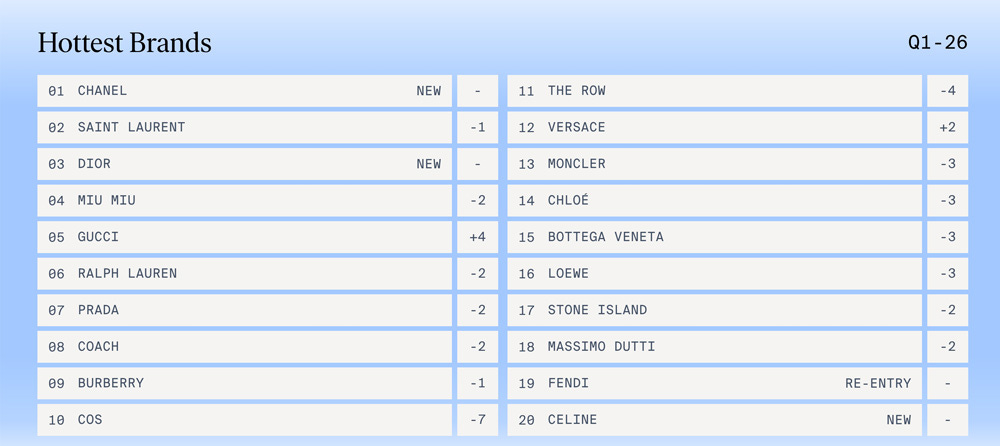
Chanel is the hottest brand on the list, debuting at #1. Matthieu Blazy has come out of the gate with a strong re-positioning of the house, modernizing its universe without alienating. He’s put bags and shoes back at the top: Chanel pumps land as the #2 hottest product, the Maxi Flap at #6. That bag dropped to lines around blocks, and Blazy used the launch to recalibrate the pricing question that had been hanging over the maison.
Gucci climbed four places to #5. Demna is driving the attention, with a 12% day-on-day demand lift following his debut show and the highest demand share among designers who showed in Milan in February.
But demand and revenue are not the same thing, Kering is still struggling with their broader turnaround. In its Q1 earnings, the group reported Gucci revenues down 14% to €1.35 billion (8% on an organic basis).
What’s wild is that Tapestry (Coach, Stuart Weitzman) is closing the gap with Kering on market cap and could flip them, something that would have been unheard of ten years ago. Gucci may be trending conversationally, but Coach is capturing the wallets of Gen Z.
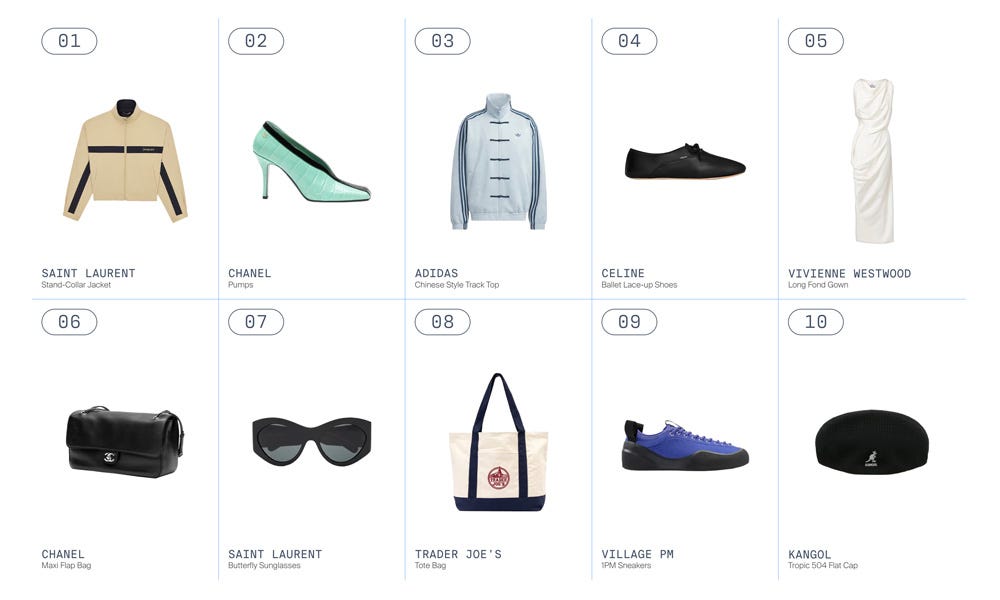
Continue reading: How 90s minimalism is driving Zara’s best quarter, and why two trend cycles are converging right now.
TikTok just opened for spirits brands after two years of waiting, and the category is late to the party. Gamestops Ryan Cohen made an unsolicited $56 billion bid for eBay, went on CNBC and said nothing, then listed his socks to help fund it. The AI dictation system I built in a weekend, and why the transcription app is the cheapest part of the stack. As well as Two books, one I’m reading and one I want too.
If you’d like a free subscription, feel free to reach out on why, I’ll most likely be happy to oblige.
Many readers expense INTAKE as a professional resource. Here’s a template if that’s helpful.
